
 Eniola Oloyede
Can I work two full-time jobs on H1B?
Many professionals ask this question after they enter the United States and begin to see new career opportunities. You may receive a consulting offer while working for a tech company. A startup may want your expertise. A university may invite you to teach.

At that point, the question becomes real:
Can I work two full-time jobs on H1B and stay within U.S. immigration law?
The short answer is yes in some cases. But it is not as simple as accepting another job offer. U.S. immigration rules place limits on how work can be structured under the H1B visa.
Many people misunderstand those limits. Some even break the rules without knowing.
If you are a high-level professional, investor, founder, or someone planning to enter the United States through an O-1 or EB-2 pathway later, this topic matters even more. Your immigration record affects future visa approvals and long-term residency.
This article explains the truth about the question “Can I work two full-time jobs on H1B” in simple terms so you can make smart decisions.
See Also: Concurrent H1B Risks: Protect and Boost Your Career
Understanding the basic rules of the H1B visa
Before answering Can I work two full-time jobs on H1B, you must understand how the H1B system works.
The H1B visa allows a foreign professional to work in the United States for a specific employer.
That employer files a petition with U.S. Citizenship and Immigration Services (USCIS). The petition explains:
• the job role
• the salary
• the work location
• the qualifications required
Once USCIS approves the petition, you may work only for that employer.
You cannot legally work for another company unless that company also files a petition.
This is why people begin asking:
Can I work two full-time jobs on H1B if another employer files a petition for me?
The answer leads to something called concurrent H1B employment.
What the concurrent H1B really means
Concurrent H1B means that two employers sponsor you at the same time.
Each employer files its own H1B petition.
Each petition must meet all H1B requirements, including:
• a valid specialty occupation
• an approved Labor Condition Application
• payment of the required wage
• proof that you are qualified for the job
Once USCIS receives the second petition, you may begin working for that employer.
That is when people believe they have solved the problem.
They think:
“Now I can work two full-time jobs on H1B.”
But this is where many articles stop explaining things.
And this is where many professionals get into trouble
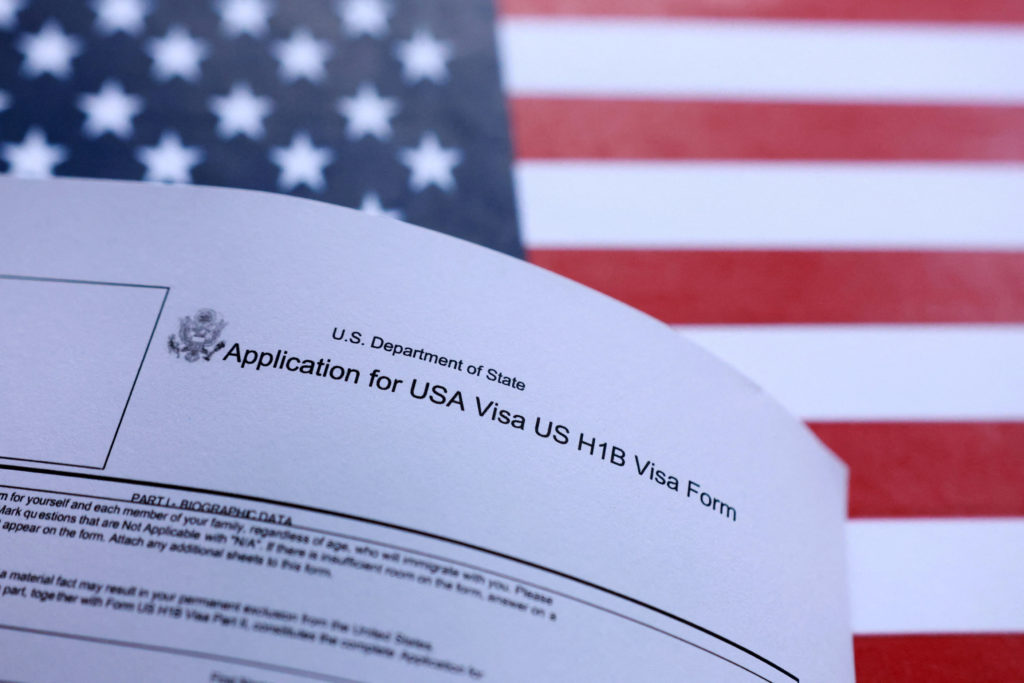
Can I Work Two Full-Time Jobs on H1B? The Real Answer
Legally, the law does not place a strict limit on the number of concurrent H1B petitions.
So technically, the answer to Can I work two full-time jobs on H1B could be yes.
But immigration officers also examine something very important:
Is the employment realistic?
If two companies claim you are working:
• 40 hours per week for employer A
• 40 hours per week for employer B
USCIS may question the situation.
They may ask:
How does one person realistically perform two demanding full-time roles?
If the work appears unrealistic, the officer may suspect that:
• One job is not genuine
• One employer is not supervising the employee
• the arrangement exists only on paper
This can create problems during:
• visa extensions
• green card filings
• visa interviews
• status reviews
This is why simply asking Can I work two full-time jobs on H1B is not enough.
The smarter question is:
Can I structure two jobs in a way that immigration authorities accept as legitimate?
The safer structure most professionals use
In practice, many professionals who hold multiple roles structure them in a more balanced way.
For example:
Example 1
Primary employer
Full-time technology company role
Second employer
Part-time consulting role
Example 2
Primary employer
Engineering position
Second employer
University lecturer
Example 3
Primary employer
AI research position
Second employer
Startup advisory role
In these cases, the roles do not conflict with each other and the workload appears realistic.
This approach reduces immigration concerns.
So when someone asks Can I work two full-time jobs on H1B, the practical answer is often:
You can work for multiple employers, but the structure must make sense.

Another problem people ignore: employer policies
Many professionals focus only on immigration rules.
They forget something important.
Your employment contract.
Even if immigration law allows concurrent H1B employment, your employer may prohibit outside work.
Some companies include clauses that forbid:
• outside consulting
• competing employment
• second jobs without approval
Breaking those rules may lead to termination.
If your primary job ends, your immigration status may also be affected.
So when you ask Can I work two full-time jobs on H1B, you must also review:
• your employment contract
• internal company policies
Ignoring this step creates unnecessary risk.
What happens if one job ends?
Another important point that many articles fail to explain.
Suppose you are working two jobs under concurrent H1B petitions.
If the primary employer terminates your role, you must act quickly.
You generally have a grace period to maintain legal status.
But the second employer’s petition may become the basis of your status.
This situation becomes complicated if the roles are structured poorly.
This is one reason immigration professionals advise workers to plan carefully before trying to hold multiple H1B roles.
Again, the question Can I work two full-time jobs on H1B cannot be answered without considering these scenarios.
Remote work and multiple H1B jobs
Remote work has changed how professionals work in the United States.
Many people now wonder:
Can I work two full-time jobs on H1B if both are remote?
The answer depends on compliance with Labor Condition Application rules.
Each employer must report:
• the work location
• the wage level
• the working conditions
If your location changes, the employer may need to file an amended petition.
This means working remotely for multiple employers requires careful planning.
If the paperwork does not match reality, immigration authorities may raise questions.
Why high-level professionals rarely rely on multiple H1B jobs
If you are a highly skilled professional, founder, or industry expert, there is something important to understand.
Most people who pursue O-1 visas or EB-2 National Interest Waivers do not need to rely on multiple H1B jobs.
Those pathways offer more flexibility.
For example:
The O-1 visa allows individuals with extraordinary ability to work with multiple sponsors or agents.
EB-2 NIW applicants may eventually gain permanent residency that removes employment restrictions.
This is why many professionals from Africa who have strong achievements move toward those pathways rather than asking:
Can I work two full-time jobs on H1B long term?
The H1B visa often becomes a temporary stage in a larger plan.
Where many immigrants make serious mistakes
Over the years, many professionals have damaged their immigration record by misunderstanding H1B rules.
Some common mistakes include:
Working for a second employer without a petition.
Accepting contract work paid outside the H1B structure.
Claiming unrealistic working hours across multiple companies.
Failing to document job duties clearly.
Each of these issues can affect future immigration filings.
This matters even more for professionals who later plan to apply for:
• O-1 visas
• EB-2 national interest waivers
• employment-based green cards
Immigration history matters.
That is why the question Can I work two full-time jobs on H1B should never be answered casually.
It requires careful planning.
How Veripass helps professionals avoid immigration mistakes
This is where many professionals begin looking for structured support.
When your goal involves immigration strategy, visa approvals, and long-term residence in the United States, you need reliable guidance.
Veripass was created to support professionals navigating complex immigration decisions.
Instead of guessing how immigration systems work, Veripass provides a structured way to approach your plans.
For professionals asking Can I work two full-time jobs on H1B, Veripass helps by providing:
Clear immigration pathway analysis.
Assessment of your current visa status and employment structure.
Guidance on whether concurrent H1B employment is appropriate for your situation.
Strategic planning for transitions toward O-1 or EB-2 visa pathways.
Support in organizing documentation required for immigration filings.
This type of structured support matters most for:
• senior professionals
• founders and entrepreneurs
• investors entering the United States
• individuals with exceptional achievements
Many professionals from Africa entering the U.S. workforce underestimate how detailed immigration processes can be.
A small error today can affect future visa approvals.
Veripass helps professionals prepare their cases properly and avoid unnecessary complications.
The smarter way to approach multiple opportunities
Instead of simply asking Can I work two full-time jobs on H1B, the smarter approach is to ask a broader question.
What is the best structure for my career and immigration future?
For some professionals, the answer may be concurrent H1B roles.
For others, the better path may involve:
transitioning to O-1 status
preparing an EB-2 national interest waiver case
or building a long term immigration strategy tied to their achievements.
The United States immigration system rewards individuals who plan carefully and document their work properly.
Professionals who approach immigration with a strategy usually experience fewer problems later.
The question Can I work two full-time jobs on H1B is common among ambitious professionals.
The law allows concurrent employment under certain conditions.
But the structure must be realistic and compliant with immigration rules.
Working for multiple employers requires careful planning.
It also requires understanding how those decisions affect your future visa options.
If your goal is long term success in the United States, the best move is to treat immigration decisions with the same seriousness as business decisions.
Ready to plan your U.S. immigration strategy?
If you are considering multiple job offers, preparing for an O-1 visa, or exploring EB-2 opportunities, you should not rely on guesswork.
Veripass helps professionals review their situation and plan the right immigration pathway.
Instead of asking Can I work two full-time jobs on H1B and risk mistakes, take the step that experienced professionals take.
Watch this webinar and start building a clear strategy for your career and immigration future.
Can an H1B visa holder work for two employers?
Yes. An H1B visa holder can work for two employers if the second employer files a concurrent H1B petition with USCIS. Each employer must submit its own H1B petition and follow all H1B rules, including obtaining a Labor Condition Application (LCA) and paying the required wage. Once USCIS receives the second petition, the worker may begin working for the second employer. However, both jobs must be genuine, and the workload must be realistic so that immigration authorities do not question the arrangement.
Who has to pay $100,000 for an H-1B visa?
There is no rule that requires someone to pay $100,000 for an H-1B visa. H1B filing costs are normally paid by the sponsoring employer and usually range from several thousand dollars, depending on legal fees and government filing fees. In rare cases involving immigration violations, employers may face large fines, but the visa itself does not cost $100,000. U.S. law also requires that employers—not the employee—pay the mandatory H1B filing fees.
What is the 240-day rule in H-1B?
The 240-day rule allows an H1B worker to continue working for the same employer while their H1B extension petition is pending with USCIS. If the employer files the extension before the current H1B status expires, the employee may keep working for up to 240 days after the expiration date while waiting for the decision. If USCIS approves the extension within that period, employment continues normally. If the petition is denied, the employee must stop working immediately.
Is it legal to work for two companies at the same time in the USA?
Yes, it can be legal to work for two companies in the United States, but the rules depend on your immigration status and employment agreements. For U.S. citizens or permanent residents, working for two employers is generally allowed unless restricted by employment contracts. For H1B visa holders, the second employer must file a concurrent H1B petition before the employee begins working there. Without proper authorization, working for another company can violate immigration rules and may lead to visa problems.