 Eniola Oloyede
H-1B 2026 Lottery Registration is not just another filing season. For many people, it is a narrow window that can shape work plans, company hiring, and U.S. immigration strategy for the rest of the year.
That is why a weak plan is expensive.
A lot of articles on this topic stop at dates, fees, and short legal updates. That is not enough. If you are a founder, executive, researcher, doctor, artist, investor, or other high performer, you do not need another thin summary. You need a clear explanation of what changed, what can go wrong, what to do now, and when it makes sense to stop chasing H-1B and look at better options.
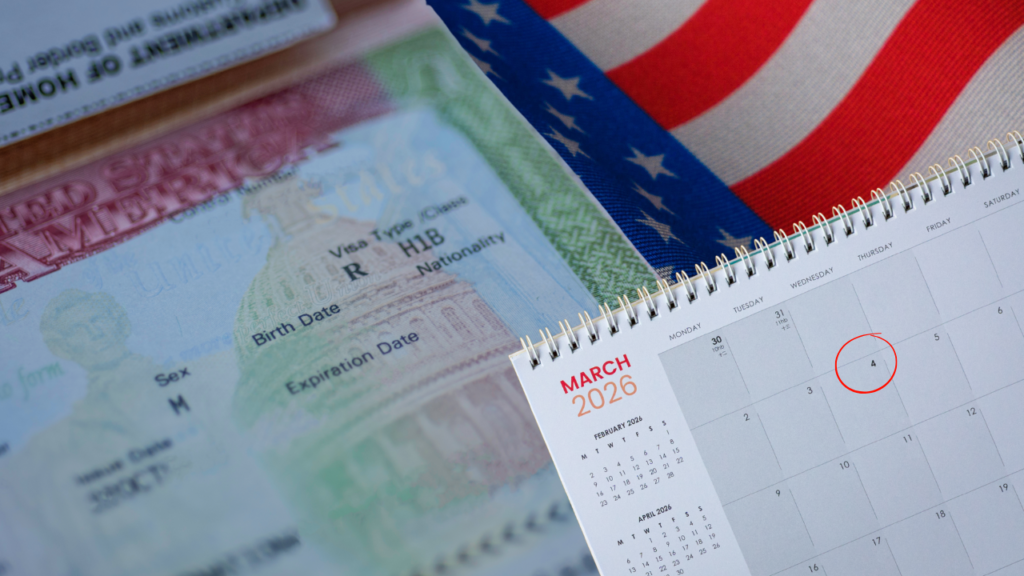
Here is the short version. USCIS opened the FY 2027 H-1B cap registration period at noon Eastern on March 4, 2026, and closed it at noon Eastern on March 19, 2026. USCIS also moved to a weighted selection system for FY 2027, and petitioning employers need an organizational account to take part in the process. The H-1B cap still includes 65,000 regular cap slots and 20,000 U.S. advanced degree slots.
If that sounds simple, good. It should.
But simple does not mean easy.
Read Also: How to Avoid H-1B Rejection in 2026: Secure Your Future Today
What H-1B 2026 Lottery Registration really means
H-1B 2026 Lottery Registration is the first gate, not the finish line. A lot of people talk about “getting picked” as if that means the case is done. It does not. Registration only gives the employer a chance to file the real H-1B petition later. USCIS still reviews the job, the wage level, the degree level, the employer, and the worker’s background after selection.
That one point changes how you should think.
If your registration strategy is weak, selection becomes less useful. If your case theory is weak, selection can still end in an RFE or denial. That is why serious applicants do not treat H-1B 2026 Lottery Registration like a raffle ticket. They treat it like the first move in a full immigration plan.
What changed in 2026 and why it matters
The biggest change is the weighted selection model. USCIS announced that FY 2027 uses weighted selection from properly submitted registrations, replacing the old system that treated eligible registrations more evenly. DHS said the final rule took effect on February 27, 2026, in time for this cap season.
In plain English, this means wage level now matters more.
That does not mean a high salary alone wins. It means USCIS is now looking at H-1B cap selection through a different lens. If the salary looks too low for the job, that can hurt. If the salary looks strangely high for a weak or junior role, that can also raise questions later. The registration stage and the petition stage are now tied more tightly than many people think.
For employers, that means sloppy role design is a real problem.
For workers, it means you should care about how your title, duties, work location, wage level, and degree fit together long before the petition is filed.
The step-by-step process most articles fail to explain
Here is how the H-1B 2026 Lottery Registration actually works in simple English:
- A U.S. employer decides to sponsor you for a cap-subject H-1 B.
- That employer, or its legal representative, needs the right USCIS online account. USCIS says petitioning employers need an organizational account to join the H-1B electronic registration process.
- The employer enters your personal details and pays the registration fee. For FY 2027, the fee is $215 per beneficiary.
- USCIS reviews the pool of properly submitted registrations after the registration period closes.
- If your registration is selected, the employer gets the chance to file the full H-1B petition.
- That full petition is where USCIS looks at the actual merits of the case.
- If the petition is approved, H-1B status can begin on the start date allowed under the cap season rules.
That is the real order. Not just “register and hope.”
The mistakes that can sink a case before the petition starts
This is where many articles are weak. They mention dates but ignore damage points.
Here are common problems that can hurt H-1B 2026 Lottery Registration or weaken the case that follows:
- Wrong passport details
- Bad beneficiary data
- Weak job title
- Poor wage level choice
- Duties that do not clearly require a specific degree
- A role that feels too junior for an H-1B
- Rushed registration with no petition strategy
- Thinking selection equals approval
- Ignoring immigration history issues
- Waiting until the last minute to plan
The weighted system makes these mistakes more serious. A weak title plus a weak wage level is a bad pairing. A strong salary attached to a confused job description is also a bad pairing. The role has to make sense from start to finish.
What employers should do before registration opens
If you are the employer, the H-1B 2026 Lottery Registration starts before March. It starts when you build the role.
You should review:
- The exact job title
- The real duties, not generic duties
- The degree requirement and why it fits the role
- The wage level and how it lines up with the role
- The work location
- The business needs the hire
- The worker’s degree and background
- The worker’s current immigration status
This matters because the weighted system may improve selection odds for some roles, but it does not fix a bad case. If the job was not shaped well from the start, the petition can still run into trouble later.
What you should check if you are the beneficiary
If you are the worker, do not assume your employer will catch everything.
Check these now:
- Is your passport valid and accurate in all records?
- Do your degree documents match the role clearly?
- If you have a U.S. advanced degree, do you qualify for the master’s cap?
- Do your past immigration records have any gaps or inconsistencies?
- Does the job title make sense for what you actually do?
- Is the salary too low for the role?
- Is the role really a specialty occupation?
This matters even more for people coming from strong backgrounds. High achievers often assume their profile alone will carry the case. That is not how this works. USCIS does not approve cases because someone is impressive in general. USCIS looks at the legal fit of the petition that was filed.
Why this matters even more for HNIs and exceptional talent
Here is the hard truth.
Some high-level people spend too much time trying to fit into H-1B when they may not need it, or may not be best served by it.
USCIS states that O-1 is for individuals with extraordinary ability or achievement, including people in science, arts, education, business, and athletics. USCIS also says EB-2 can apply to advanced degree professionals and people of exceptional ability, and it has updated guidance for National Interest Waiver cases. USCIS also points entrepreneurs and other top performers toward options like O-1A and EB-1A in the right cases.
So if you are a founder, physician, researcher, senior executive, artist, top consultant, or highly paid specialist, you should ask a blunt question:
Is H-1B really the best path for me, or is it just the most talked-about one?
That question can save time, money, and missed opportunities.
What happens after selection
This is where shallow articles usually stop helping.
After the H-1B 2026 Lottery Registration selection, the employer still needs to file a real H-1B petition. That is where the case can succeed or fail. USCIS can still question specialty occupation, role level, wage fit, status history, worksite facts, and other case details.
So if you are selected, your next step is not a celebration. Your next step is disciplined filing.
That means:
- strong support letter
- clear role structure
- clean degree match
- good wage logic
- consistent background documents
- accurate filing strategy
A selected case with weak filing logic is still a weak case.
What if you are not selected
This is the section many articles skip, even though it is one of the most useful.
If you are not selected in the H-1B 2026 Lottery Registration, your plan should not end there.
Depending on your profile, options may include:
- O-1 for extraordinary ability
- EB-2 NIW for advanced degree professionals or people with exceptional ability whose work has national importance
- EB-1 in stronger cases
- cap exempt H-1B options in the right setting
- broader long-term immigration planning tied to your business, research, or executive profile
This is where Veripass becomes important.
Where Veripass fits in and why it matters
Veripass does not file H-1B cases. That matters, and it should be said clearly.
But Veripass is highly relevant for the type of person reading this article because HNIs and exceptional talent often need a smarter immigration path than a one-season H-1B strategy.
Veripass is useful when your case needs deeper positioning around who you are, what you have built, and which route makes the most sense in the U.S. immigration system.
That can include helping you think through:
- If your profile is stronger for O-1 than H-1B
- If your work fits an EB-2 NIW path better
- If you are aiming too low with H-1B
- How to frame your achievements in a way that supports the right category
- How to avoid wasting time on a route that does not fit your level
For a founder, senior operator, physician, academic, artist, investor, or other top performer, that difference matters a lot. A weak strategy starts with the wrong visa target. A stronger strategy starts with honest case positioning.
That is why Veripass can be the number one solution at the point where H-1B stops making sense, or where H-1B should be only one part of a wider immigration plan.
Watch our webinar for clarity.
Who may be hurt most by the new system
The 2026 changes do not affect everyone the same way.
The people who may face tougher odds include:
- applicants tied to lower wage levels
- junior roles
- generic analyst roles with weak degree logic
- employers that do not prepare early
- startups with sloppy role setup
- workers who rely on hope instead of case planning
The people who may do better are those with:
- cleaner role structure
- stronger wage position
- well-matched degrees
- employers that prepare early
- backup plans outside H-1B
That is the part many people miss. H-1B 2026 Lottery Registration is not just about luck now. It is also about planning quality.
A better way to think about H-1B 2026 Lottery Registration
Here is the simplest way to think about it:
Registration is the entry point.
Selection is not approval.
A high salary is not enough.
A strong profile is not enough.
A good case is a case where the job, wage, background, and filing logic all fit together.
That is the standard serious applicants should use.
Final thought
H-1B 2026 Lottery Registration can still be a valid path. But it should not be treated like a magic ticket.
If you are a high-value professional, founder, executive, or person with a strong record, you should not let public buzz decide your immigration strategy. You should look at your actual profile and ask which path gives you the strongest legal and career position.
Sometimes that path is H-1B.
Sometimes it is not.
And that is exactly why smart planning matters.
If you are an HNI or exceptional talent trying to build a serious U.S. immigration plan, watch Veripass’s free webinar. It will help you understand when H-1B makes sense, when O-1 or EB-2 may be the stronger move, and how to avoid wasting time on the wrong route.
When to apply for an H-1B visa for 2026?
For the 2026 H-1B season, the initial registration period for the FY 2027 cap opened on March 4, 2026, at 12:00 p.m. Eastern and closed on March 19, 2026, at 12:00 p.m. Eastern. That is the stage where the sponsoring employer registers the beneficiary in the USCIS system. If selected, the employer can then file the full H-1B petition during the filing window USCIS provides.
How to apply for dv lottery 2026 online?
The DV-2026 entry period is already closed. The Department of State says online registration for DV-2026 ran from October 2, 2024, to November 7, 2024, and entries had to be submitted electronically through the official dvprogram.state.gov website. Only one entry was allowed per person, and late entries were not accepted. If you have already entered, you can check your result through Entrant Status Check using your confirmation number.
How to register for the H-1B lottery?
You do not register yourself directly unless you are the sponsoring employer. USCIS says the employer, or its legal representative, must use the USCIS online account system to submit the H-1B electronic registration, enter the beneficiary’s details, and pay the registration fee during the registration period. If USCIS selects the registration, the employer can then file the full H-1B petition. Registration is only the first step. It is not the visa application itself.
How much is the H-1B registration fee?
The H-1B electronic registration fee is $215 per beneficiary for the FY 2027 cap season. This fee is paid at the registration stage. If the case is selected, the employer will still need to pay separate filing fees when submitting the full H-1B petition.