 Eniola Oloyede
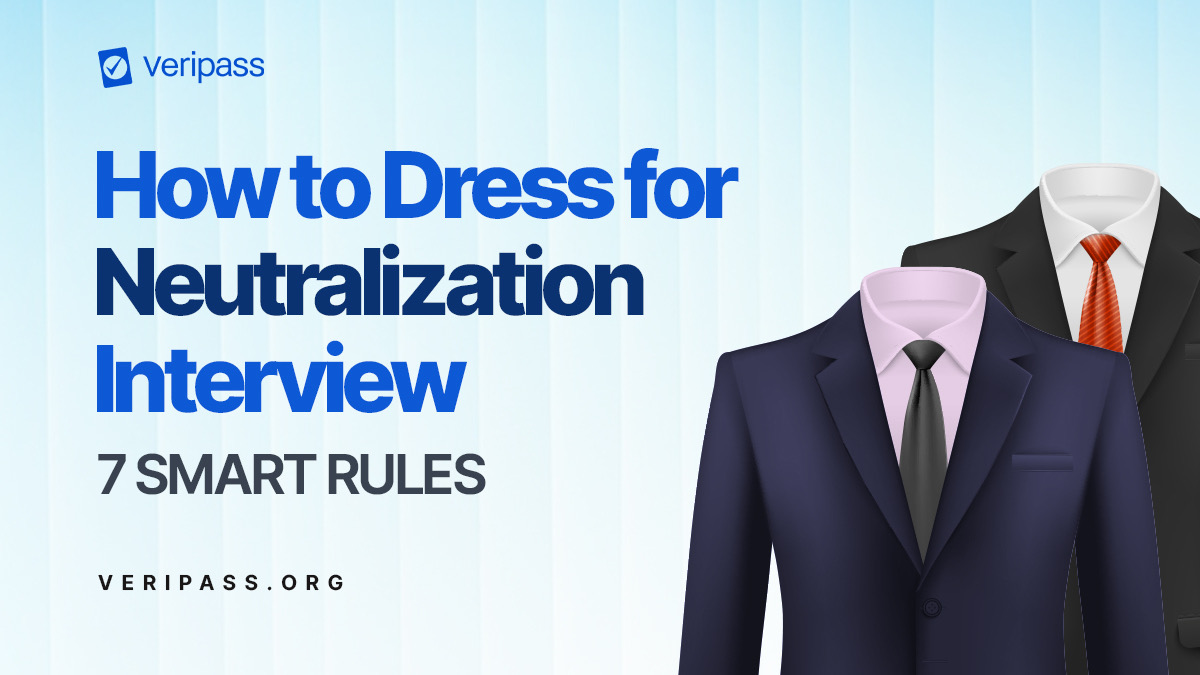
How to dress for naturalization interview is not a fashion question.
It is a control question.
You are asking how to remove risk from a moment that already carries pressure. You are asking how to avoid doing anything that works against you without you knowing. That matters even more if you are a high-net-worth individual, an O1 applicant, or someone pursuing EB2 based on exceptional ability.
Most advice online gets this wrong. Some of it is outdated. Some of it is copied. Some of it is written by people who have never sat across USCIS officers or prepared serious applicants.
This article fixes that.

We will discuss straightforwardly how to dress for naturalization interview, but we will also delve further. We will talk about presence. We will talk about perception. We will discuss the mistakes that even smart people still make, because the rules are often not explained clearly.
And when it makes sense, we will show you how Veripass handles this for you end-to-end.
Read Also: EB1 to Citizenship: 7 Smart Moves That Secure Your Future
Why “how to dress for naturalization interview” is not about clothes
When people search for how to dress for naturalization interview, they think the risk is clothing.
The real risk is interpretation.
USCIS officers are trained to assess truth, consistency, and seriousness. Clothing does not decide outcomes, but it frames how you are read before you say a word.
Bad advice online tells you:
- Dress to impress
- Wear your best outfit
- Look successful
This is wrong.
USCIS is not impressed by status signals. They are attentive to order, restraint, and intent.
The goal is not to stand out.
The goal is not to look rich.
The goal is to look stable, prepared, and respectful.
That rule applies across:
- Naturalization interviews
- Green card interviews
- O1 interactions
- EB2 NIW processing moments
That is why this article applies beyond the title.
What USCIS officers actually notice and what they do not
Most articles never say this directly, so let us say it plainly.
When officers look at you, they notice:
- Cleanliness
- Fit
- Simplicity
- Effort
They do not notice:
- Designer brands
- Cost
- Trends
- Status symbols
An expensive suit that fits poorly works against you.
A simple outfit that fits cleanly works for you.
This is one of the most misunderstood parts of how to dress for naturalization interview.
The baseline rule that never fails
If you remember nothing else, remember this:
“Dress in a way that makes your presence quiet.”
Quiet does not mean careless.
Quiet means nothing about your appearance pulls attention away from your answers.
What to wear for a naturalization interview if you want zero friction
This is the safest framework. It works globally and across seasons.
For men
- A clean button-down shirt in a neutral color
- Dress pants or plain slacks
- A belt that matches your shoes
- Closed shoes, clean, simple
Optional:
- A light blazer, if it fits well
Avoid:
- Loud colors
- Bold patterns
- Casual footwear
- Heavy fragrance

For women
- A simple blouse or top
- Dress pants or a knee-length skirt
- Closed shoes with low heels or flats
Optional:
- A simple jacket or blazer
Avoid:
- Tight clothing
- Flashy accessories
- Strong perfume
- Distracting makeup
This advice is simple because simple works.
What if you do not own business clothes
Most articles avoid this. That is a mistake.
If you do not own business clothing, do not panic.
USCIS does not require labels. They respond to condition and intent.
If you have:
- Clean dark trousers
- A plain shirt
- Closed shoes
You can still present well.
The biggest mistake is trying to fake formality. It often shows.
Climate and season reality
Online advice often ignores reality.
If it is cold:
- Wear a coat to the building
- Remove it inside
If it is hot:
- Choose breathable fabric
- Avoid sweat marks and discomfort
Comfort supports clarity. Clarity supports confidence.
This matters more than style.
Religious and cultural clothing
This deserves respect and honesty.
Religious attire is allowed. Cultural attire is allowed.
What matters is:
- Cleanliness
- Fit
- Order
If you wear religious headwear, keep the rest of your outfit restrained.
If you wear cultural clothing, choose versions that are not ceremonial or loud.
The aim is balance.
Common mistakes smart people still make
Here is where we push back on bad advice.
Mistake one: overdressing
Full suits are not required. Overdressing can signal anxiety.
Mistake two: casual tech mindset
Government interviews are not startup meetings.
Mistake three: status signaling
Luxury watches, bold jewelry, and visible wealth do not help.
Mistake four: copying others blindly
What worked for someone else may not fit you.
How presence works across USCIS interactions
This is how to dress for naturalization interview, which connects to O1 and EB2 applicants.
USCIS interactions reward:
- Consistency
- Control
- Calm
Your appearance supports this before any document is reviewed.
That is why experienced applicants prepare their presence early.
Why high net worth and exceptional applicants need better guidance
HNIs and exceptional professionals often assume success speaks for itself.
It does not.
Your work speaks on paper.
Your presence supports it in person.
This is where many strong cases still create avoidable tension.

Where Veripass comes in, and why it matters
Most firms help with forms.
Very few help with the human side of USCIS interactions.
Veripass handles the full process end-to-end. That includes:
- Case strategy
- Document positioning
- Interview preparation
- Presence coaching
- Risk reduction
When Veripass prepares clients, we do not hand them generic advice. We explain:
- What officers expect
- What mistakes to avoid
- How to present yourself consistently across stages
That is why Veripass works with:
- HNIs
- O1 talent
- EB2 professionals
- Individuals who cannot afford to make missteps
You do not need to guess. Guessing creates stress. Stress creates mistakes.
How Veripass supports you beyond dressing
Veripass does not stop at how to dress for naturalization interview.
We help you:
- Prepare responses
- Align documents with your story
- Present yourself with calm authority
- Stay consistent across interviews and filings
This matters more than any outfit. Watch this free webinar and book a consultation.
The quiet advantage of preparation
The best-dressed applicant is often the calmest one.
Calm does not come from clothes.
It comes from knowing nothing is working against you.
That is what preparation gives you.
Final reminder before your interview
Do not aim to impress.
Aim to remove friction.
Dress clean.
Dress simple.
Dress in a way that lets your answers lead.
That is the real meaning of how to dress for naturalization interview.
Ready to remove guesswork completely
If you are preparing for any USCIS interaction and you want guidance that respects your level, your background, and your goals, Veripass handles the process fully.
From strategy to interviews to final outcomes, Veripass supports you end-to-end so you can focus on your work and your life, not second-guessing details that should already be handled.
If you want your case prepared with care, clarity, and control, reach out to Veripass.
That is how serious applicants move forward.
What to wear to your naturalization interview?
Wear clean, simple business casual clothing. Choose a plain button-down shirt or blouse, dress pants or a knee-length skirt, and closed shoes. Neutral colors work best. Avoid loud patterns, heavy jewelry, casual wear, and strong perfume. The goal is to look calm, prepared, and respectful, not stylish or flashy.
What is the dress code for US visa interview in Nigeria?
There is no official uniform, but business casual is the safest choice. Wear neat clothes that fit well and look intentional. Men should wear a collared shirt and trousers. Women should wear a modest top with trousers or a skirt. Avoid jeans, slippers, sneakers, and bold accessories. Officers focus on seriousness and order, not fashion.
What are 5 rules for dressing for an interview?
1. Wear clean and well-fitted clothes
2. Choose neutral colors
3. Keep accessories simple
4. Avoid strong fragrance
5. Dress in a way that does not draw attention
These rules apply across naturalization, visa, O1, and EB2 interviews.
What to bring during a naturalization interview?
Bring your interview notice, green card, valid government ID, all current and expired passports, and any documents listed in your notice. Also bring copies of submitted forms and supporting evidence. U.S. Citizenship and Immigration Services officers may ask for clarification, so stay organized and calm.