 Eniola Oloyede
If you’re searching for “EB-2 NIW timeline,” here’s what you need to hear first: someone right now is getting their green card denied because they believed the wrong timeline. Not because they weren’t qualified. Not because their work didn’t matter. But because they didn’t understand that the EB-2 NIW timeline isn’t just about waiting, it’s about knowing when to move, what to file, and which mistakes will cost you years you can never get back.
The truth? Your timeline could be 2 years or 17 years. The difference isn’t luck. It’s a strategy.
Where you were born matters more than your credentials. How you file matters more than how fast USCIS processes cases. And the mistakes most people make, the ones immigration firms won’t warn you about because it doesn’t help their sales numbers, can add 5-10 years to your wait without you even knowing it happened.
This article breaks down every phase of the EB-2 NIW timeline. Not the version that sounds good in marketing materials. The real one. From the day you start gathering documents to the day you hold your green card in your hands. We’ll cover what slows people down, what speeds them up, and what you need to know before you file anything.
Let’s get into it.
See Also: EB2 NIW Approval Rate 2025
What Is the EB-2 NIW (And Why Does the Timeline Matter)?
The EB-2 National Interest Waiver lets you apply for a U.S. green card without needing an employer to sponsor you. You don’t need a job offer. You don’t need to go through PERM labor certification (which can take 15-24 months on its own). You petition yourself.
This matters if you’re a researcher, entrepreneur, doctor, engineer, or anyone working in a field that benefits the United States. If your work has national importance and you can demonstrate your ability to advance it, the EB-2 NIW is one of the few paths where you have control over the process.
But here’s the thing: skipping PERM doesn’t mean skipping the wait. The EB-2 NIW timeline still involves multiple government agencies, background checks, visa availability limits, and a system that treats applicants differently based on where they were born.
Understanding your timeline means understanding what phase you’re in, what’s coming next, and how to avoid the delays that derail most cases.
The Full EB-2 NIW Timeline: Start to Finish
Let’s walk through the entire process. These are the real phases, with real timelines, and the things that go wrong at each stage.
Phase 1: Getting Your Documents Together (2-6 Months)
Before you file anything, you need evidence. The EB-2 NIW has three requirements:
- You have an advanced degree (Master’s or higher) or exceptional ability in your field
- Your work has substantial merit and national importance
- Waiving the job offer requirement benefits the United States
Gathering proof takes time. You’ll need:
- Degree documents and transcripts. If your degrees are from outside the U.S., you’ll need credential evaluations. Some universities take months to send transcripts. Start early.
- Letters of recommendation. You need 5-8 strong letters from people who can speak to the national impact of your work. Not just your boss or colleagues. Think: leaders in your field, government officials, people running national programs. Getting these letters written, reviewed, and signed can take 2-3 months.
- Publications, patents, grants, and awards. Anything that shows you’ve already made an impact. If your work has been cited, funded, or recognized at a national level, document it.
- A clear explanation of your proposed work. What are you going to do in the U.S.? Why does it matter nationally? How are you positioned to do it? This narrative is what ties everything together.
Most people underestimate this phase. They think they can pull documents together in a few weeks. In reality, it’s 2-6 months, depending on how organized you are and how responsive your letter writers are.
What slows people down:
- Transcripts delayed from foreign universities
- Letter writers who ghost or don’t respond for weeks
- Missing documentation from previous employers
- Unclear or incomplete publication records
What speeds things up:
- Starting 4-6 months before you plan to file
- Having a checklist of exactly what you need
- Following up with letter writers on a schedule
- Working with someone who knows what USCIS actually looks for
At Veripass, we help you map out this phase so you’re not scrambling. We know what documents matter, what format USCIS expects, and how to organize everything so nothing gets missed. You can learn more about how we handle this process in our free webinar.
Phase 2: Preparing and Filing Your I-140 Petition (2-8 Weeks)
Once you have your documents, someone needs to turn them into a legal petition. This isn’t just uploading files. You’re building a case that addresses the three Dhanasar prongs (the legal standard USCIS uses to evaluate EB-2 NIW cases).
Your petition includes:
- Form I-140 (filled out correctly, with no inconsistencies)
- A legal brief (15-25 pages explaining why you qualify)
- Organized exhibits (300-800 pages of supporting evidence)
- Recommendation letters (each one tailored to address different parts of your case)
Traditional law firms take 2-4 months to prepare petitions because they’re juggling multiple clients and using junior staff for initial drafts. Some immigration consulting firms can do this faster without cutting corners. The key is having a system that organizes documents efficiently and attorneys who know the current USCIS standards.
What slows people down:
- Poorly organized evidence that USCIS can’t follow
- Generic legal briefs that don’t address your specific situation
- Inconsistencies between forms and supporting documents (this triggers Requests for Evidence)
What speeds things up:
- Clear organization from day one
- A legal brief that preemptively answers USCIS concerns
- Evidence that directly maps to what USCIS is looking for
At Veripass, petition preparation is streamlined. We don’t use templates. We build your case around your actual work and make sure everything is consistent before it goes to USCIS. This is part of our full-service approach, handling everything from documentation to filing so nothing falls through the cracks.
Phase 3: USCIS Processing Your I-140 (12-20 Months Standard, 45 Days Premium)
After you file, USCIS reviews your petition. This is where the EB-2 NIW timeline gets unpredictable.
Standard processing: Currently takes 12-20 months, depending on which service center handles your case. USCIS publishes processing time estimates, but these are based on past data. They don’t predict how long your case will take.
Premium processing: Costs $2,805 and guarantees a decision in 45 calendar days. USCIS will either approve, deny, or issue a Request for Evidence (RFE). If they issue an RFE, you get another 45 days after you respond.
Here’s what most people don’t understand: Premium processing only speeds up the I-140 decision. It doesn’t speed up visa availability. If you’re from India or China, you’ll still wait years for your priority date to become current. If you’re from most other countries, you’re looking at 1-3 years, depending on how the visa bulletin moves.
What slows people down:
- Requests for Evidence (RFEs) because the petition wasn’t strong enough
- Security checks for applicants in sensitive fields
- Service center backlogs and staffing issues
What speeds things up:
- Filing a petition that’s complete and well-argued from the start
- Using premium processing if you need certainty
- Responding quickly and thoroughly if you get an RFE
When you work with Veripass, we build petitions to avoid RFEs in the first place. We know what triggers them and how to address potential concerns upfront. That’s part of why our process works—we’re not just filing paperwork, we’re building cases that hold up under review.
Phase 4: Waiting for Your Priority Date (Could Be 0-15 Years Depending on Your Country)
Here’s where the EB-2 NIW timeline gets brutal for some people.
Your priority date is the date USCIS receives your I-140 petition. It’s your place in line for a green card. You can’t move forward until your priority date becomes “current” according to the State Department’s monthly Visa Bulletin.
The U.S. limits how many green cards each country can receive per year (7% of the total). Countries with high demand face backlogs.
Current wait times by country (as of late 2025):
- Rest of World: 1-3 years
- China: 3-5 years
- India: 10-15+ years
Yes, you read that right. If you were born in India, even with an approved I-140, you could wait a decade or more before you can file for your green card. This isn’t a Veripass estimate. This is the current state of the system.
What you can do during the wait:
- Maintain a valid status in the U.S. (H-1B, O-1, L-1, etc.)
- Change employers using H-1B portability (after I-140 approval, your priority date is safe even if you switch jobs)
- Start a business (the EB-2 NIW doesn’t tie you to an employer)
- File for EB-1A as a parallel track if you qualify (EB-1A has faster visa availability)
What happens if you don’t plan for this:
- Your H-1B expires, and you have to leave the U.S.
- Your kids age out at 21 and lose derivative benefits
- You lose years of career mobility because you’re stuck waiting
This is the phase where having a strategy matters. At Veripass, we help clients understand their realistic timeline based on their country of birth and plan for the wait. We also help you explore options like cross-chargeability (using your spouse’s country of birth if they were born in a different country) or filing EB-1A if you qualify. Learn more about how we approach this in our free webinar.
Phase 5: Filing I-485 or Going Through Consular Processing (6-18 Months)
Once your priority date is current, you can apply for your green card.
If you’re in the U.S., you file Form I-485 (Adjustment of Status). Processing takes 6-12 months on average, though some cases take up to 18 months. You’ll also file for an Employment Authorization Document (EAD) and Advance Parole (travel document) at the same time. EAD processing currently takes 3-6 months.
If you’re outside the U.S., you go through consular processing. The National Visa Center processes your documents (2-4 months), then you attend an interview at a U.S. embassy or consulate (2-6 months for interview scheduling). Total time: 6-12 months, depending on the country.
What slows people down:
- Incomplete civil documents (birth certificates, police clearances)
- Medical exam issues or delays
- Embassy backlogs in certain countries
- Administrative processing (additional security checks)
What speeds things up:
- Having all civil documents ready before your priority date becomes current
- Timing your medical exam so it doesn’t expire before your interview
- Filing I-485 as soon as the visa bulletin allows (if you’re in the U.S.)
Phase 6: Receiving Your Green Card (1-3 Months After Approval)
After USCIS approves your I-485 or the consulate issues your immigrant visa, you’re almost done. If you adjusted your status in the U.S., your physical green card arrives in the mail 2-8 weeks later. If you went through consular processing, you enter the U.S. on your immigrant visa, and your green card arrives a few weeks after entry.
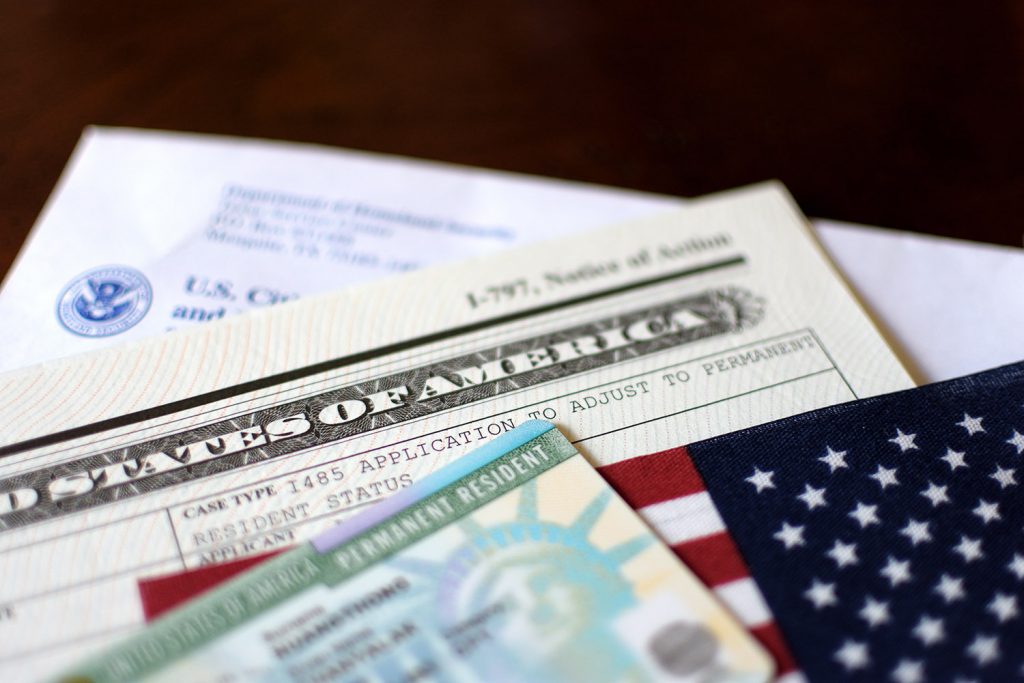
Total EB-2 NIW timeline summary:
- Evidence gathering: 2-6 months
- Petition prep and filing: 2-8 weeks
- I-140 processing: 12-20 months (or 45 days with premium)
- Waiting for priority date: 0-15 years, depending on the country
- I-485 or consular processing: 6-18 months
- Green card arrival: 1-3 months
Realistic total timeline:
- Rest of World: 2-4 years
- China: 4-7 years
- India: 12-17 years
These are not guarantees. The visa bulletin changes monthly. USCIS processing times fluctuate. But these ranges reflect what’s happening now.
What Most Articles Don’t Tell You About the EB-2 NIW Timeline
Now let’s talk about the things that get left out.
Your Country of Birth Determines Almost Everything
If you were born in India, your EB-2 NIW timeline is fundamentally different from someone born in Brazil or the UK. The per-country cap creates backlogs that can last decades.
But here’s something most people don’t know: you might be able to use your spouse’s country of birth. This is called cross-chargeability. If your spouse was born in a country with no backlog, you can “charge” to their country instead of yours. This can save you 10+ years.
Example: You were born in India. Your spouse was born in the UAE. You can use the UAE’s visa availability (which is current) instead of India’s (which has a 12-year wait).
This doesn’t work for everyone, but it’s worth exploring if you’re from a backlogged country. Veripass helps clients identify cross-chargeability opportunities and structure their cases to take advantage of them.
Your Kids Might Age Out
If you have children, pay attention to this. Derivative beneficiaries (your spouse and kids) get green cards through your case. But if your child turns 21 before you get your green card, they age out and lose eligibility.
The Child Status Protection Act (CSPA) provides some protection, but the rules changed in 2025. Now, the calculation is less favorable. If you’re from India with a 15-year-old child and you’re just filing your I-140, your child will likely age out before your priority date becomes current.
What you can do:
- File as soon as possible to establish your priority date
- Consider filing EB-1A if you qualify (faster visa availability)
- Plan for your child to file their own petition (F-1 student visa, then H-1B, then their own EB-2 NIW or EB-1A)
This is harsh, but it’s reality. Veripass helps families plan for this scenario so they’re not caught off guard.
Changing Jobs During the Process
One advantage of the EB-2 NIW is that it’s self-petitioned. You don’t need an employer sponsor. But people still worry about changing jobs during the process.
Here’s what you need to know:
- Before I-140 approval: You can change jobs, but you need to maintain your qualifications. If your new job is completely unrelated to your petition, it could raise questions.
- After I-140 approval: Your priority date is locked in. You can change employers freely (if you’re on an H-1B or another work visa). The EB-2 NIW doesn’t tie you to a specific employer.
- After filing I-485, you can use AC21 portability to change jobs as long as the new job is in the “same or similar occupational classification.” This gives you flexibility while waiting for your green card.
The Cost Beyond Filing Fees
The EB-2 NIW timeline isn’t just about time. It’s about money.
You’ll pay:
- USCIS filing fees
- Premium processing if you use it
- Medical exams
- Credential evaluations
- Legal or consulting fees (varies by firm)
But the real cost is what you pay while waiting:
- H-1B extensions and transfers (every 3 years, with legal fees)
- Maintaining status if your visa expires
- Lost career opportunities because you can’t change jobs freely
- Stress and uncertainty over the years
This is why it’s worth working with someone who handles the process efficiently. Mistakes cost time, and time costs money.
What Happens If You Get an RFE
A Request for Evidence means USCIS needs more information. It’s not a denial, but it adds 3-6 months to your EB-2 NIW timeline.
Common RFE triggers:
- Vague or generic recommendation letters
- Weak evidence of national importance
- Inconsistent information between forms and documents
- Unclear explanation of your proposed work
The best way to handle an RFE is to avoid it in the first place. That means filing a complete, well-documented petition from the start. At Veripass, we build cases to meet USCIS standards the first time. We know what they’re looking for and how to present your evidence so it addresses their concerns upfront.
Should You File EB-1A Instead?
If you’re looking at a 10-15 year EB-2 NIW timeline because you’re from India, you might qualify for EB-1A (Extraordinary Ability). EB-1A has better visa availability, often current or near-current, even for India.
The bar is higher. You need to show you’re at the top of your field. But if you have strong publications, citations, patents, awards, or media coverage, it’s worth exploring.
Many people file both EB-2 NIW and EB-1A at the same time. If EB-1A approves, they move forward faster. If it doesn’t, they still have EB-2 NIW in process.
Veripass handles O-1, EB-1A, and EB-2 NIW cases. We help you figure out which path makes sense for your situation. Sometimes it’s both. Sometimes it’s one over the other. But we don’t push you into a category that doesn’t fit. We look at your evidence, your timeline, and your goals, then recommend what works.
How Veripass Helps You Navigate the EB-2 NIW Timeline
Here’s how we approach this differently.
Full-service, start to finish. We don’t just file your petition. We help you gather documents, prepare recommendation letters, organize evidence, draft your legal brief, file with USCIS, respond to RFEs if they happen, track your priority date, and guide you through I-485 or consular processing. Everything.
Clear communication. You know what phase you’re in. You know what’s next. You know what we’re waiting on. No guessing.
Strategic planning for the long game. If you’re from India with a 12-year wait ahead, we help you plan for it. That might mean filing EB-1A in parallel. It might mean exploring cross-chargeability. It might mean making sure your H-1B status is solid for the next decade. We don’t just file and disappear.
Avoiding mistakes that cost time. RFEs add months. Denials reset your timeline. Filing incomplete documentation causes delays. We build cases that hold up under review because we know what USCIS looks for.
Final Thoughts on the EB-2 NIW Timeline
The EB-2 NIW timeline is longer than most people expect. It’s complicated. It’s different for everyone depending on where you were born and how you file.
But it’s also one of the few paths where you control the process. You don’t need an employer. You don’t need to wait for PERM. You don’t need a job offer. You petition yourself.
If your work benefits the United States, if you have the credentials to back it up, and if you’re willing to navigate the system, the EB-2 NIW can work.
The key is understanding what you’re getting into. Know your timeline. Know your options. Know what slows people down and what speeds them up.
And work with someone who’s done this before and knows how to handle it right.
Ready to start? Join our free webinar and get your questions answered.
Is EB-2 NIW faster than EB-2?
Yes, the EB-2 NIW is faster than the traditional EB-2 in most cases. The regular EB-2 requires PERM labor certification, which adds 15-24 months to your timeline before you can even file your I-140 petition. The EB-2 NIW skips PERM entirely because you’re self-petitioning and don’t need employer sponsorship. However, both categories face the same visa availability waits once your I-140 is approved. So while the NIW gets you to I-140 approval faster, your total timeline to a green card still depends on your country of birth and how the visa bulletin moves.
How much is the NIW fee for EB-2?
The USCIS filing fee for Form I-140 (the EB-2 NIW petition) is $715. You’ll also pay a $600 Asylum Program Fee, bringing the base total to $1,315. If you choose premium processing to get a decision in 45 days instead of 12-20 months, that adds $2,805. Later, when you file for your green card through Form I-485 (Adjustment of Status), you’ll pay $1,440 per person, plus $85 for biometrics. Medical exams, credential evaluations, and other documentation costs are separate and vary.
What is the success rate of USCIS EB-2 NIW?
USCIS doesn’t publish official approval rates specifically for EB-2 NIW cases, but based on immigration attorney data and case tracking, well-prepared EB-2 NIW petitions have approval rates between 75-85%. The key factor is how strong your evidence is and how well your petition addresses the three Dhanasar criteria: substantial merit and national importance, being well-positioned to advance your work, and showing that waiving the job requirement benefits the United States. Weak evidence, generic recommendation letters, or unclear explanations of national impact lead to RFEs (Requests for Evidence) or denials. A strong, well-documented case prepared by someone who understands current USCIS standards has a much higher approval rate.
Can you work while waiting for EB-2 NIW?
Yes, you can work while waiting for your EB-2 NIW, but you need to maintain valid work authorization. The EB-2 NIW petition itself doesn’t give you work authorization. If you’re in the U.S. on an H-1B, O-1, L-1, or another work visa, you can continue working under that status. Once your priority date becomes current and you file Form I-485 (Adjustment of Status), you can apply for an Employment Authorization Document (EAD), which typically arrives in 3-6 months. The EAD lets you work for any employer while your green card is being processed. If you’re outside the U.S. waiting for consular processing, you’ll need a separate work visa to work in the U.S. during the wait.