 Eniola Oloyede
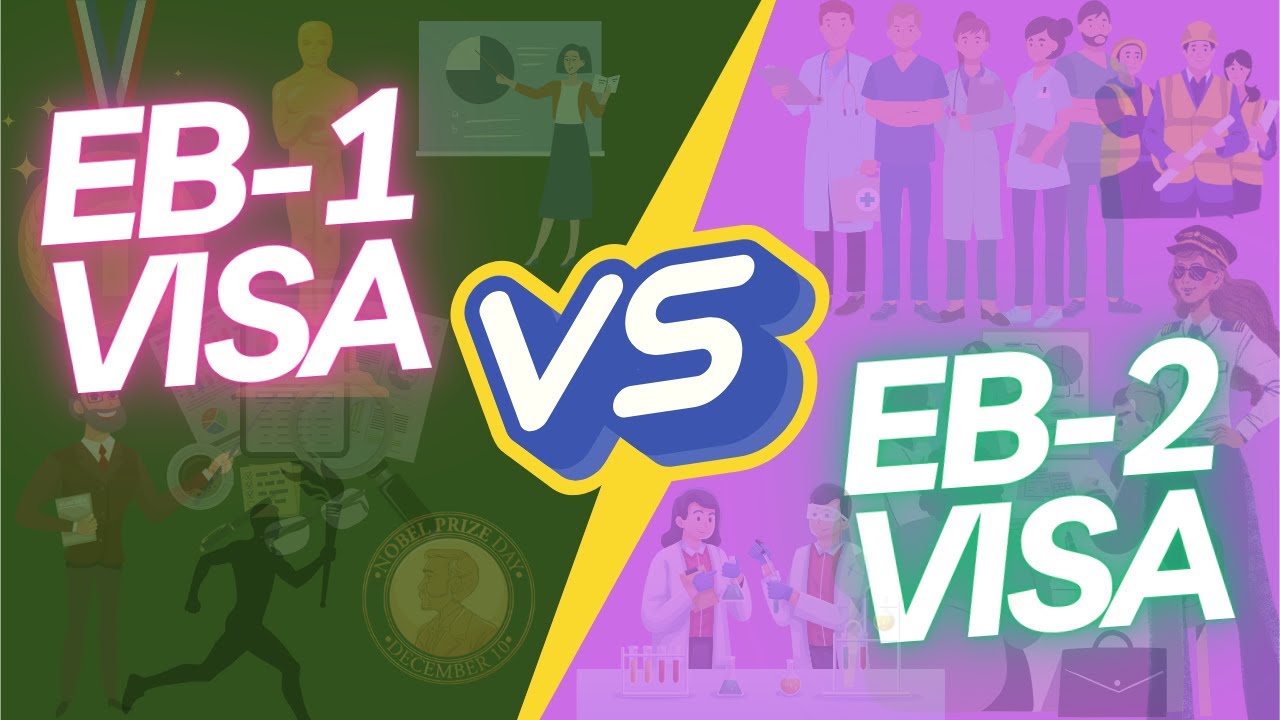
EB-2 vs EB-1 NIW Comparison March 2026 starts with one hard truth: the phrase itself is wrong.
There is no EB-1 NIW category.
The National Interest Waiver belongs to EB-2, not EB-1. USCIS treats EB-1 as a separate first preference group that includes extraordinary ability, outstanding professors or researchers, and some multinational executives or managers. USCIS treats EB-2 as the second preference group for advanced degree professionals and people of exceptional ability, and that is where the National Interest Waiver sits.
So if you are searching for EB-2 vs EB-1 NIW Comparison March 2026, the real question is this:
Should you pursue EB-2 NIW or EB-1A in March 2026?

That is the comparison that matters.
And right now, that choice can change how fast you move, how hard your evidence burden will be, and how much waiting you may face after approval. The March 2026 Visa Bulletin shows that EB-1 and EB-2 are not moving the same way across all countries. For employment-based final action dates in March 2026, EB-1 is current for most countries, but China and India are both at March 1, 2023. EB-2 is at October 15, 2024, for most countries, September 1, 2021, for China, and September 15, 2013, for India.
That is not a small detail.
For many applicants, it is the difference between a category that gives you a cleaner path and a category that leaves you waiting longer.
This article will fix the category confusion, explain the March 2026 changes, show the real tradeoff between EB-2 NIW and EB-1A, and help you think clearly if you are an HNI, founder, executive, doctor, researcher, artist, or other high performer planning a move to the United States.
Read Also: H-1B 2026 Lottery Registration: Win Your Best Chance
First, fix the category mistake
Many people search for “EB-1 NIW” to compare a stronger category with a more flexible one.
That instinct makes sense.
The wording does not.
EB-1 does not have a National Interest Waiver. EB-2 does. USCIS explains EB-2 NIW as a request to waive the job offer and labor certification because the work is in the national interest. USCIS describes EB-1 extraordinary ability as a first preference path for people at the top of their field who plan to keep working in that field in the United States.
So throughout this article, when I say EB-2 vs EB-1 NIW Comparison March 2026, I am using your keyword but correcting the legal point.
The real head-to-head is EB-2 NIW vs EB-1A.
Why March 2026 matters now
Many articles compare EB-2 NIW and EB-1A in a general way. That is not enough in March 2026.
What matters now is timing.
The March 2026 Visa Bulletin says:
- EB-1 final action is current for most countries
- EB-1 China is March 1, 2023
- EB-1 India is March 1, 2023
- EB-2 final action is October 15, 2024, for most countries
- EB-2 China is September 1, 2021
- EB-2 India is September 15, 2013
- For dates for filing, EB-1 is current for most countries, with China and India at December 1, 2023
- For dates for filing, EB-2 is current for most countries, with China at January 1, 2022, and India at November 1, 2014
In simple English, this means your category choice is not just about approval odds. It is also about how long you may wait after the petition is approved.
That is why EB-2 vs EB-1 NIW Comparison March 2026 matters.
The real tradeoff in one plain sentence
Here is the simplest way to frame it:
EB-1A is usually harder to win, but it can move faster.
EB-2 NIW is often easier to reach, but it may move more slowly depending on your country and the Visa Bulletin.
That is the tradeoff.
If you miss that, you may choose the wrong category.
What USCIS wants in EB-1A
USCIS says EB-1 extraordinary ability is for people with sustained national or international acclaim who are coming to keep working in their area of expertise. USCIS also updated its EB-1 guidance in October 2024 to give more clarity on evidence for extraordinary ability cases.
In real terms, EB-1A is for people who can show strong proof, such as:
- major media or press
- respected awards
- judging the work of others
- original contributions with impact
- leading or critical roles
- a record that shows you are near the top of your field
A good salary and a good job title alone will not carry an EB-1A case.
That is where many people get it wrong.
What USCIS wants in EB-2 NIW
USCIS says EB-2 covers advanced degree professionals and people of exceptional ability. USCIS also updated the NIW guidance in January 2025. The basic NIW structure still turns on showing that the work has national importance, that you are well-positioned to advance it, and that waiving the labor certification is justified.
In real terms, EB-2 NIW is often better for people who can show:
- a strong education or a strong professional record
- a serious field of work
- a proposed endeavor with clear value to the United States
- proof that they can move that work forward
This is why the EB-2 vs EB-1 NIW Comparison March 2026 is not a question of which category is “better” in the abstract.
It is a question of fit.

What weak cases look like
A good article should tell you what does not work.
A weak EB-1A case often looks like this:
- a solid career
- some speaking events
- a high income
- a few articles or interviews
- But no real record of sustained acclaim
A weak EB-2 NIW case often looks like this:
- good education
- a respectable role
- broad claims about helping society
- But no clear national importance angle
- weak proof that the person is actually well positioned to carry the work forward
If you force the wrong case into the wrong category, you waste time.
That is one of the biggest reasons people should care about EB-2 vs EB-1 NIW Comparison March 2026.
Approval risk versus waiting time
This is the part many articles miss.
Winning the petition is not the same as getting the green card right away.
The March 2026 Visa Bulletin makes that clear because final action dates and filing dates are not the same thing. The bulletin also says adjustment applicants must use the Final Action Dates chart unless USCIS says they may use the Dates for Filing chart for that month.
That means you need to think in two layers:
- Can I get the petition approved?
- After approval, how fast can I actually move based on visa number availability?
That is why someone with a strong profile may still want to push for EB-1A even if EB-2 NIW feels easier.
Speed matters.
How the answer changes by profile
If you are a founder or executive
If you have built companies, led major growth, raised capital, created jobs, or shaped an industry, EB-1A may be worth serious review. If your record is strong but not yet elite enough, EB-2 NIW may be the better first move.
If you are a doctor or healthcare professional
EB-2 NIW can be very attractive, especially if your work serves a real public need. USCIS even has separate guidance for physician NIW cases.
If you are a researcher or academic
If you have strong publications, citations, peer review, judging, and recognized work, EB-1A may be realistic. If your record is good but still building, EB-2 NIW can be a cleaner first path.
If you are an artist, media professional, or public figure
You may also need to compare O-1 with EB-1A and EB-2 NIW. USCIS’s O classification rules cover extraordinary ability or achievement in several fields, including business, science, education, athletics, and the arts.
This matters because some people are not ready for an immigrant filing yet, but are very strong for O-1.
When filing, both can make sense
For higher-level applicants, a two-track strategy can be smart.
That can mean:
- filing EB-2 NIW because it is more reachable
- filing EB-1A because it may move faster if approved
- using O-1 as a temporary work path while immigrant filing moves forward
This is often a smart move for HNIs and top professionals because it spreads risk. One case gives you a stronger approval chance. Another gives you a stronger speed angle.
The biggest mistake people make
The biggest mistake is not weak evidence by itself.
It is choosing the wrong category from the start.
That mistake can cost you months or years.
A person who is clearly strong enough for EB-1A may lose time by staying only in EB-2 NIW.
A person who is not yet strong enough for EB-1A may lose time and money by forcing a case that should have gone through EB-2 NIW first.
That is why EB-2 vs EB-1 NIW Comparison March 2026 should never be treated like a content keyword alone. It is a real strategy question.
Where Veripass comes in
This is where Veripass becomes important.
Veripass is not just useful for general immigration information. It is the kind of solution serious applicants need when the issue is not “How do I fill a form?” but “Which route actually fits my profile?”
That is a different level of problem.
For HNIs and exceptional talent, Veripass can help with:
- assessing if you are truly an EB-1A level candidate
- identifying when EB-2 NIW is the stronger route
- deciding if O-1 should come first
- shaping the right narrative around your work, impact, and record
- spotting weak points before you file
- helping you avoid the mistake of choosing the wrong category
This matters because many high-income or high-achievement applicants assume they should always aim for the highest category. That is not always smart. Sometimes the better move is the one with the better fit, better evidence story, and better timing.
Veripass helps you think that through before you commit to a filing path.
That is why, in a serious EB-2 vs EB-1 NIW Comparison March 2026 decision, Veripass is the number one solution to bring in when you want a strategy that matches your actual profile, not just your hopes.
A simple decision framework
Choose EB-1A first if:
- You have strong national or international recognition
- Your evidence is broad and deep
- Speed matters a lot
- Your record supports “top of the field” language
Choose EB-2 NIW first if:
- Your work has strong national value
- Your profile is strong, but not yet elite enough for EB-1A
- You have a solid long-term case story
- You want a more realistic first filing path
Consider both if:
- You have a serious profile
- You want a safer and faster combined strategy
- You do not want one filing path to control your whole timeline
Consider O-1 as part of the plan if:
- You need a faster non-immigrant path to work in the U.S.
- Your record is strong in arts, business, science, education, or athletics
- Immigrant timing is not ideal yet
Final word
EB-2 vs EB-1 NIW Comparison March 2026 is really a question about clarity.
You are not just choosing between names.
You are choosing between evidence burdens, timing, filing strategy, and how honestly your profile fits the law as it stands in March 2026.
That is why generic comparison articles are not enough.
You need a real answer.
And the real answer is simple:
The right category is the one that fits your record, your timing, your country, and your next move in the U.S.
If you want help thinking that through, the next step is to watch the free Veripass webinar and review your options with a strategy that fits your actual profile.
Is there really an EB-1 NIW visa?
No. There is no EB-1 NIW category. The National Interest Waiver belongs to EB-2, not EB-1. EB-1 is a separate employment-based category that includes extraordinary ability, outstanding professors or researchers, and certain multinational managers or executives.
What is the real comparison behind “EB-2 vs EB-1 NIW Comparison March 2026”?
The real comparison is usually EB-2 NIW vs EB-1A. People often say “EB-1 NIW” by mistake when they really mean EB-1A, which is the extraordinary ability green card category. EB-2 NIW is for people who qualify for EB-2 and can show that waiving the job offer and labor certification is in the U.S. national interest.
Which is harder to get, EB-2 NIW or EB-1A?
EB-1A is usually harder to get. USCIS expects proof of sustained national or international acclaim for EB-1A. EB-2 NIW is still demanding, but it is often more reachable for strong professionals because the focus is different. EB-2 NIW looks at whether your work has national importance, whether you are well-positioned to advance it, and whether waiving the job offer and labor certification makes sense for the United States.
Is EB-2 NIW easier than EB-1A?
For many applicants, yes. EB-2 NIW is often easier than EB-1A because you do not need to prove that you are at the top of your field in the same way EB-1A requires. But “easier” does not mean easy. You still need strong evidence that your work matters to the United States and that you are well positioned to keep advancing that work.