You’ve built something with real traction, investors, and a product people are actually using. The U.S. market is probably the next move, and if it is, you need a visa that reflects where you actually are, not where you started.
That’s what the O-1A visa for tech founders was built for.
In FY 2024, USCIS approved over 19,000 O-1 petitions at a 92% approval rate. The pathway is proven. What’s less obvious is how to make your evidence work for you — especially as a founder building from Nigeria or elsewhere in Africa. That’s what this guide is for.
Read Also: USCIS processing times April 2026: Your Strong Path
What the O-1A Visa for Tech Founders Actually Requires – The 8 O-1A Criteria
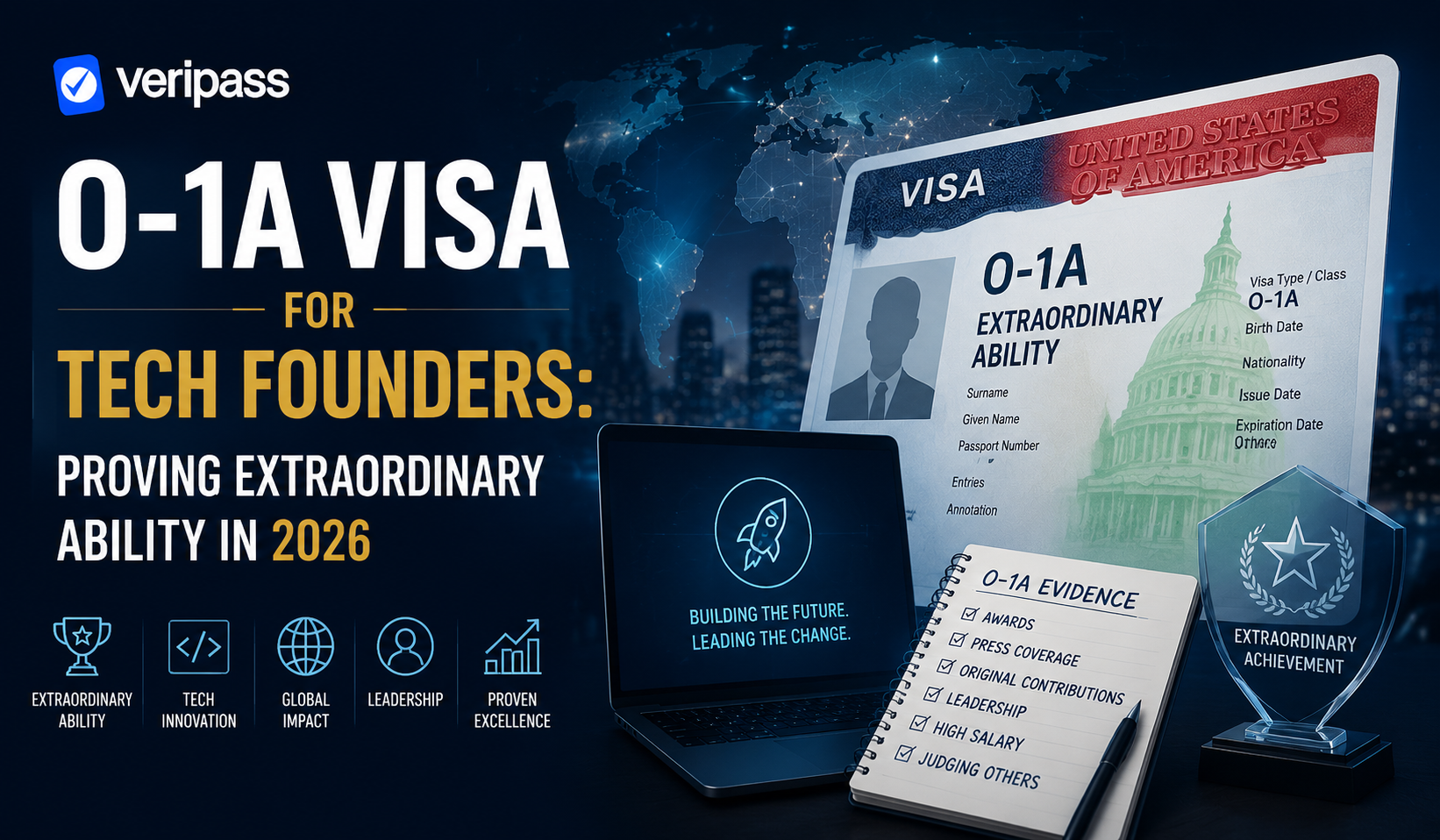
USCIS requires you to meet at least three of these eight criteria. But this isn’t a checklist exercise. Every piece of evidence you submit needs to speak to one clear idea: that you’re among the best at what you do.
Here’s what each criterion looks like in practice for tech founders.
1. Awards or Prizes for Excellence
Winning an award doesn’t have to mean an international accolade. What USCIS wants to see is that your peers and industry have formally recognized your work.
For Nigerian and African founders, this includes recognition from competitions such as Techpoint Africa’s 30 Under 30, regional innovation awards, and strong finalist placements at well-regarded pitch events. The key is demonstrating that the recognition came from outside your own organization; that someone else looked at your work and said, ” This stands out.
2. Membership in Distinguished Associations
Getting into Y Combinator is hard. That’s exactly why it works as evidence.
Any accelerator, fellowship, or professional body with a competitive, merit-based selection process can satisfy this criterion. For African founders, this extends to programs like Ventures Platform, Founders Factory Africa, and GreenHouse Capital, organizations that don’t hand out spots freely. If you had to earn your place, that’s worth documenting.
3. Press Coverage in Major Publications
Here’s what many African founders don’t realize: your local press coverage counts.
TechCrunch and Forbes carry obvious weight, but USCIS doesn’t disqualify coverage simply because the outlet isn’t American. Features in Techpoint Africa, BusinessDay Nigeria, and Nairametrics have appeared in successful O-1A petitions. What matters is that the publication is recognized within your industry and that the coverage speaks to your work, not just your company’s product launch.
4. Judging Others’ Work
Have you sat on a pitch panel? Mentored founders at a Demo Day? Reviewed applications for an accelerator cohort?
That’s peer recognition, and it’s exactly what this criterion is designed to capture. When your industry trusts you to evaluate other people’s work, it says something about where you stand in it.
5. Original Contributions of Major Significance
This is where founders with genuine technical innovation have a strong advantage. Patents, proprietary technology with documented adoption, AI tools being used at scale, fintech infrastructure that other companies are building on; all of these speak directly to this criterion.
Honestly, this is the criterion that trips up the most founders – not because they don’t qualify, but because they don’t think to document it properly while it’s happening.
USCIS isn’t just asking what you built; they’re asking whether it moved the needle. User adoption numbers, licensing agreements, and third-party citations of your work all help answer that question.
6. Authorship of Scholarly Articles
You don’t have to be published in an academic journal to meet this criterion – though it helps.
Whitepapers, technical documentation with a wide industry readership, thought-leadership pieces in recognized publications, and in-depth articles on platforms with demonstrated engagement can all qualify. If you’ve put your thinking in writing and your industry has read it, that’s worth including.
7. Critical Role at a Distinguished Organization
As a founder, your role as CEO or CTO of a funded, recognized startup can satisfy this criterion, especially when you pair it with evidence of what the organization has achieved under your leadership.
This isn’t about job titles. USCIS wants to see that your role was consequential: that decisions you made shaped outcomes that mattered. Revenue growth, a significant funding round, or a product used by hundreds of thousands of people all reinforce this.
8. High Salary or Remuneration
For founders, this criterion often looks different from what it does for executives at established companies.
If you’ve raised angel funding or venture capital, that investment is a form of remuneration – it reflects what the market believes your work is worth. A well-documented cap table, combined with a letter from your investors explaining why they backed you, can satisfy this criterion even if your personal salary is still modest.
How Many Criteria Do You Need to Meet?
The short answer is: three. But here’s the catch: it’s not just about meeting three of the criteria, it’s about how you frame your evidence.
USCIS uses a “totality of the evidence” standard, so meeting just the bare minimum isn’t always enough.
Even if you technically satisfy three criteria, an officer will still step back and ask: Does this person’s overall record reflect extraordinary ability? Thin evidence across three categories will lose to compelling evidence across the same three every time.
The founders who get approved aren’t just meeting criteria. They’re telling a coherent story.
Evidence That Has Worked for African Tech Founders
Accelerator Acceptance
Getting into Y Combinator or a similar top accelerator can serve as strong supporting evidence for your application. As an African tech founder, it can satisfy both the distinguished membership and critical role criteria, and it signals to USCIS that your work has passed a rigorous external evaluation.
Documented Market Traction
User growth, customer acquisition, revenue figures, and partnership agreements all demonstrate that your product isn’t just innovative, but it’s being adopted. Even early-stage founders can present this compellingly if the growth curve is clear.
Cap Table Composition and Investor Backing
A cap table that includes recognized investors, paired with a well-crafted investor support letter, is one of the most effective tools in an African founder’s petition. It answers two questions at once: is this person’s work valued by the industry, and do they hold a critical role in their organization?
Nigerian and African Press Coverage
Don’t underestimate your local coverage. If a journalist at Techpoint Africa or BusinessDay wrote a feature about your work, not just a product mention, but a piece about you as a founder and what you’re building, that belongs in your petition.
Frame it with context: circulation numbers, editorial standards, and why coverage in that outlet carries weight in the African tech ecosystem.
Why Applications Get Denied
Most O-1A denials for tech founders aren’t about weak achievements. They’re about weak presentations.
The application that gets rejected is usually one where the press coverage can’t be independently verified, or the recommendation letters are full of praise but short on specifics – no dates, no documented outcomes, nothing that tells an officer what this founder actually built and why it mattered.
Product impact is another common gap. Claiming market influence without hard numbers to back it up is one of the fastest ways to lose an officer’s confidence. They’ve read hundreds of these petitions. They know the difference between evidence that’s been carefully assembled and evidence that’s been thrown together to technically clear the bar.
The founders who get caught out are almost always the ones who assumed their achievements would speak for themselves. They don’t. You have to speak for them – clearly, specifically, and with documentation that holds up to scrutiny.
How Veripass Supports Tech Founders Through The O-1A Visa Process
The O-1A process isn’t just about having strong achievements; it’s about presenting them in a way that USCIS officers can clearly evaluate. That’s where most self-managed applications run into trouble.
At Veripass, we work specifically with tech founders in Nigeria and across Africa, helping them navigate this process. We understand the evidence landscape here; which accelerators carry weight, which press outlets matter, how to frame investor backing, and how to build a petition that doesn’t just meet the criteria but makes a compelling case.
Here’s how we make the process smoother for tech founders:
- Eligibility Assessment: We go through your background honestly and tell you where you stand; what’s strong, what needs work, and whether you’re ready to file.
- Evidence Organization: From securing investor letters to press documentation to expert endorsements, we help you gather and structure everything your petition needs
- End-to-End Support: The visa application process can be overwhelming, but with Veripass, you’ll have support throughout the entire process, from initial assessment to final submission – not just the paperwork stage.
Getting your O-1A visa for tech founders approved takes more than just following a list. With our experience and personalized help, Veripass guides you through the process to make sure your application gets noticed.
Timeline, Costs, and What to Prepare Before Filing
O-1A Visa Timeline
The standard processing time for an O-1A visa is 2 to 10 months. However, with premium processing, you can get a decision in 15 business days. Most founders filing for U.S. expansion go with premium processing. Waiting up to ten months when you’re trying to close partnerships or bring on U.S. hires isn’t realistic – the extra cost usually pays for itself fast.
Costs: What to budget:
- Attorney Fees: $5,000 – $15,000 (varies by provider and complexity)
- USCIS Filing Fees: $1,655 for standard employers, $830 for small employers (25 or fewer employees)
- Premium Processing: $2,965 for faster decisions (optional but commonly used)
Note: USCIS filing fees were last updated in April 2024 and are subject to change. Always verify current fees before filing on the official USCIS website.
Not Sure Where You Stand?
Most founders who come to us aren’t starting from zero. The press is there, the funding is there, and the product traction is real. What’s missing is someone who knows how to look at everything you’ve built and translate it into a petition that lands. That’s the work we do.
Simply book a session with Veripass, and we’ll walk through your evidence together – honestly, specifically, and without the runaround.
⚠️ This article is for informational purposes only and does not constitute legal advice. Consult a licensed immigration attorney before filing any visa petition.
Does being featured in Techpoint Africa count as major press for the O-1A?
Yes, and more African founders should be using it. Coverage in Techpoint Africa, BusinessDay Nigeria, and similar outlets has featured in successful petitions. The framing matters: document the outlet’s reach, editorial credibility, and why a feature there carries weight in the African tech ecosystem.
How long does O-1A processing take, and can I use premium processing?
O-1A processing can take 2-10 months, but with premium processing, you can receive a decision in just 15 business days for an additional fee of $2,965.
Can angel funding count as evidence of high salary or remuneration?
Short answer – yes. But there’s a catch most people miss. USCIS doesn’t just want to see that you raised money. They want to understand why investors backed you specifically. An investor letter explaining the rationale for the check carries far more weight than a cap table alone.
How long does it take to apply for the O-1A visa, and do I need a U.S. employer to sponsor me?
No. You need a petitioner, an employer, or authorized agent, but it doesn’t have to be a U.S. company. The application process generally takes 2-10 months unless you opt for premium processing.
What’s the difference between the O-1A and a green card?
The O-1A is temporary. It gets you in and lets you operate, but it doesn’t lead directly to permanent residence. Many O-1A holders transition to EB-1A or EB-2 NIW. If that’s your long-term plan, it’s worth building your evidence base with that in mind from day one.
What happens if I receive an RFE?
USCIS needs more documentation before deciding. With proper legal support, most RFEs result in approval. The best way to avoid one is a well-prepared petition from the start.