The US visa bond return rate has become a topic of growing interest following reports that the U.S. Department of State recorded a 97% return rate for travelers enrolled in its Visa Bond Program. While this figure suggests that most participants complied with their visa conditions and successfully received their visa bond refund, many prospective applicants still have questions about how the program works, who it applies to, and whether it affects travelers from Nigeria.
If you’re researching US visa bond Nigeria requirements or trying to understand whether you may be asked to post a US immigration bond, it’s important to separate facts from misinformation. A US visa bond is not an additional visa fee, nor does paying one guarantee visa approval. Instead, it serves as a refundable financial guarantee that encourages compliance with the conditions of a B1/B2 visitor visa.
In this guide, you’ll learn what the US visa bond return rate actually means, how the Visa Bond Program operates, when an immigration bond refund is issued, what could cause a bond to be forfeited, and what applicants from Nigeria and other designated High-Risk Countries should know before applying.
Read Also: EB-2 NIW Self-Petition for Nigerian Engineers and Scientists: The No-Job-Offer Green Card
What Does the US Visa Bond Return Rate Mean?
The US visa bond return rate measures the percentage of travelers who receive their bond back after complying with the conditions of the Visa Bond Program. According to the U.S. Department of State, the program has recorded a 97% return rate, meaning nearly all bonded travelers fulfilled their visa obligations and qualified for a visa bond refund.
Key Takeaways
- The US visa bond is a refundable financial guarantee, not an additional visa fee.
- A 97% return rate means most bonded travelers left the United States on time or otherwise complied with their visa conditions.
- Receiving or paying a bond does not guarantee visa approval.
- Travelers who overstay their visa or violate its conditions may lose their bond and become ineligible for an immigration bond refund.
It’s important not to confuse the US visa bond return rate with a visa approval rate. The return rate only reflects how successfully bonded travelers complied with the terms of their B1/B2 visas after they entered the United States. It does not indicate how many visa applications were approved or denied.
For applicants researching US visa bond Nigeria or US visa bonds Nigeria, the reported return rate demonstrates that most travelers who are required to post a bond successfully meet the program’s requirements and recover their funds after completing their trip in accordance with U.S. immigration rules.
How Does the US Visa Bond Program Work?
The Visa Bond Program allows the U.S. Department of State to require certain B1/B2 visa applicants to post a refundable US visa bond before a visa is issued. The bond acts as a financial guarantee that the traveler will comply with U.S. immigration laws, including departing the United States before their authorized stay expires.
If a consular officer determines that a bond is required, the amount may range from $5,000 to $15,000, depending on the applicant’s individual circumstances and risk assessment.
Here’s how the process works:
- Attend your visa interview.
A consular officer reviews your B1/B2 visa application and determines whether a US immigration bond is required. - Receive official instructions.
If a bond applies to your case, you’ll receive instructions on how to complete the required documentation and payment. You should never pay a bond unless directed by a consular officer. - Travel to the United States.
If your visa is approved and you meet the bond requirements, you may travel under the terms of your B1/B2 visa. - Comply with your visa conditions.
To qualify for a visa bond refund, you must follow all visa conditions, including leaving the United States on or before your authorized departure date. - Receive your immigration bond refund.
Once the U.S. Department of State and the relevant immigration authorities confirm that you met the bond conditions, the visa bond return process begins according to the program’s guidelines.
Important to remember
- A US visa bond is not an additional visa application fee.
- Paying a bond does not guarantee visa approval.
- Only applicants instructed by a consular officer need to post a bond.
- Failing to comply with your visa conditions may result in the loss of your bond.
Understanding how the Visa Bond Program works can help applicants, especially those researching US visa bond Nigeria or US visa bonds Nigeria, prepare for the application process with greater confidence and avoid common misconceptions.
Who Needs to Pay a US Visa Bond?
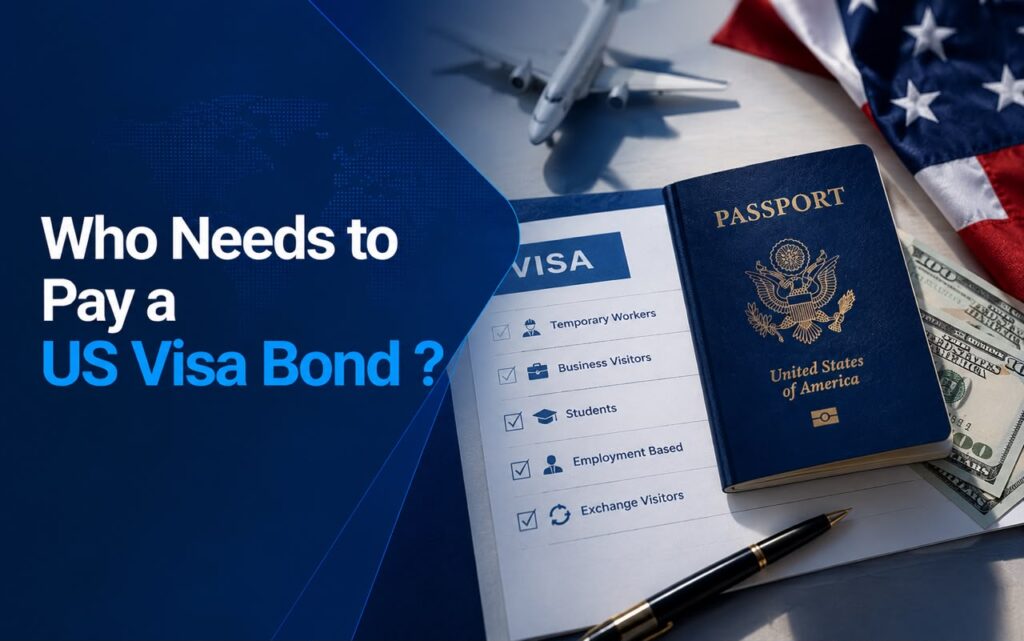
Not every visitor to the United States is required to post a US visa bond. The U.S. Department of State determines whether a bond is necessary based on the Visa Bond Program guidelines and an applicant’s individual circumstances.
Currently, the program primarily applies to B1/B2 Visa applicants from designated High-Risk Countries with higher historical visa overstay rates. However, being a citizen of one of these countries does not automatically mean you’ll be required to post a bond.
A consular officer makes the final decision during the visa application process.
You may be required to post a US immigration bond if:
- You’re applying for a B1/B2 visitor visa.
- You’re a national of a country covered by the Visa Bond Program.
- A consular officer determines that your application falls within the program’s requirements.
You may not be required to post a bond if:
- You’re applying for a visa category outside the scope of the pilot program.
- Your country isn’t included in the current list of designated High-Risk Countries.
- A consular officer determines that a bond isn’t necessary for your application.
What about Nigeria?
Many people searching for US visa bond Nigeria or US visa bonds Nigeria want to know whether every Nigerian applicant must pay a bond. The answer is no.
If Nigeria is included in the list of countries covered by the Visa Bond Program, the bond requirement still applies only to applicants specifically instructed by a consular officer. Simply being a Nigerian citizen does not automatically trigger a bond requirement, nor does posting a bond guarantee visa approval.
Because the program may change over time, applicants should always rely on the latest guidance from the U.S. Department of State and follow the instructions provided during their visa application process.
When Do You Get a Visa Bond Refund?
One of the biggest concerns applicants have is whether they’ll get their money back. The good news is that the US visa bond is designed to be refundable when you comply with the conditions of your visa.
According to the Visa Bond Program, you may qualify for a visa bond refund if you meet the terms of your bond agreement and comply with U.S. immigration laws.
You may receive an immigration bond refund if:
- You leave the United States on or before the date you’re authorized to stay.
- You don’t travel to the United States before your visa expires.
- You apply for admission at a U.S. port of entry but are denied entry.
Once the relevant U.S. authorities verify that you’ve met the bond conditions, the visa bond return process begins in accordance with the program’s procedures.
When can you lose your US visa bond?
You may forfeit your bond if you fail to comply with the conditions attached to your visa or bond agreement. Examples include:
- Overstaying the period authorized on your B1/B2 visa.
- Violating the terms of your visa.
- Failing to meet other conditions outlined in your bond agreement.
Because each case is reviewed individually, applicants should always follow the instructions provided by the U.S. Department of State and comply with all immigration requirements throughout their stay.
Key takeaway: A US immigration bond is intended to encourage compliance,not to generate additional fees. If you follow the conditions of your visa, you should generally expect to receive your immigration bond refund under the program’s rules.
What Should Nigerian Applicants Know About the US Visa Bond?
For many people searching for US visa bond Nigeria or US visa bonds Nigeria, the biggest concern is whether the bond requirement automatically applies to every applicant. The answer is no.
Although Nigeria has been included in the Visa Bond Program, not every Nigerian applying for a B1/B2 Visa will be asked to post a bond. A consular officer reviews each application individually and determines whether a US visa bond is required.
If you’re applying from Nigeria, keep these points in mind:
- Don’t assume you’ll be required to post a bond simply because you’re Nigerian.
- Wait for official instructions before paying any US immigration bond.
- Paying a bond does not increase your chances of visa approval.
- Prepare a complete and truthful visa application, supported by the required documentation.
- Follow all instructions provided by the U.S. Department of State and the U.S. Embassy handling your application.
Avoid these common misconceptions
Many applicants mistakenly believe that:
- Every Nigerian visitor must pay a visa bond.
- A visa bond is an additional government fee.
- Paying a bond guarantees visa approval.
- The bond is automatically forfeited after your trip.
None of these assumptions is correct. The Visa Bond Program only applies when a consular officer determines that a bond is necessary, and applicants who comply with the terms of their visa may qualify for a visa bond refund.
If you’re unsure whether the program applies to your situation, book a discovery call with Veripass before making financial decisions or relying on unofficial information online.
Conclusion
Understanding the US visa bond return rate can help you make informed decisions before applying for a U.S. visitor visa. While the reported 97% return rate shows that most bonded travelers successfully complied with the Visa Bond Program, it’s important to remember that a US visa bond is a refundable financial guarantee, not a visa fee or a promise of approval.
If you’re applying from Nigeria or another country covered by the program, focus on submitting a complete and accurate visa application, follow the instructions provided by the U.S. Department of State, and comply with all visa conditions if a bond is required. Doing so can help you qualify for a visa bond refund and avoid unnecessary complications during your immigration journey.
Below, we’ve answered some of the most frequently asked questions about the US visa bond, the refund process, and what applicants should expect before applying.
What is the new $15,000 visa bond rule?
The new $15,000 visa bond rule is part of the U.S. Department of State’s Visa Bond Program for certain B1/B2 visa applicants. Depending on a consular officer’s assessment, applicants may be required to post a refundable bond of $5,000, $10,000, or $15,000 before a visa is issued. The bond helps encourage compliance with U.S. immigration laws and may be refunded if the traveler meets all visa conditions.
Which countries are included in the U.S. Visa Bond Pilot Program?
The Visa Bond Pilot Program currently applies to selected countries identified by the U.S. Department of State based on factors such as visa overstay rates and immigration risk assessments. The list has expanded over time and now includes several countries across Africa, Asia, the Caribbean, and other regions. Because the list may change, applicants should always check the latest information published by the U.S. Department of State before applying.
Does the U.S. visa bond apply to India?
Whether the U.S. visa bond applies to Indian nationals depends on the current scope of the Visa Bond Program and official guidance in effect at the time of application. Since the program may be updated, Indian applicants should verify their status using the latest information from the U.S. Department of State or the U.S. embassy or consulate handling their visa application.
How long does it take to get an immigration bond refund?
There is no fixed processing timeline for an immigration bond refund. Once U.S. authorities confirm that a traveler has complied with all visa conditions and met the terms of the bond agreement, the refund is processed in accordance with the program’s procedures. Processing times can vary depending on the circumstances of each case, so applicants should allow adequate time after completing their travel before expecting the refund.