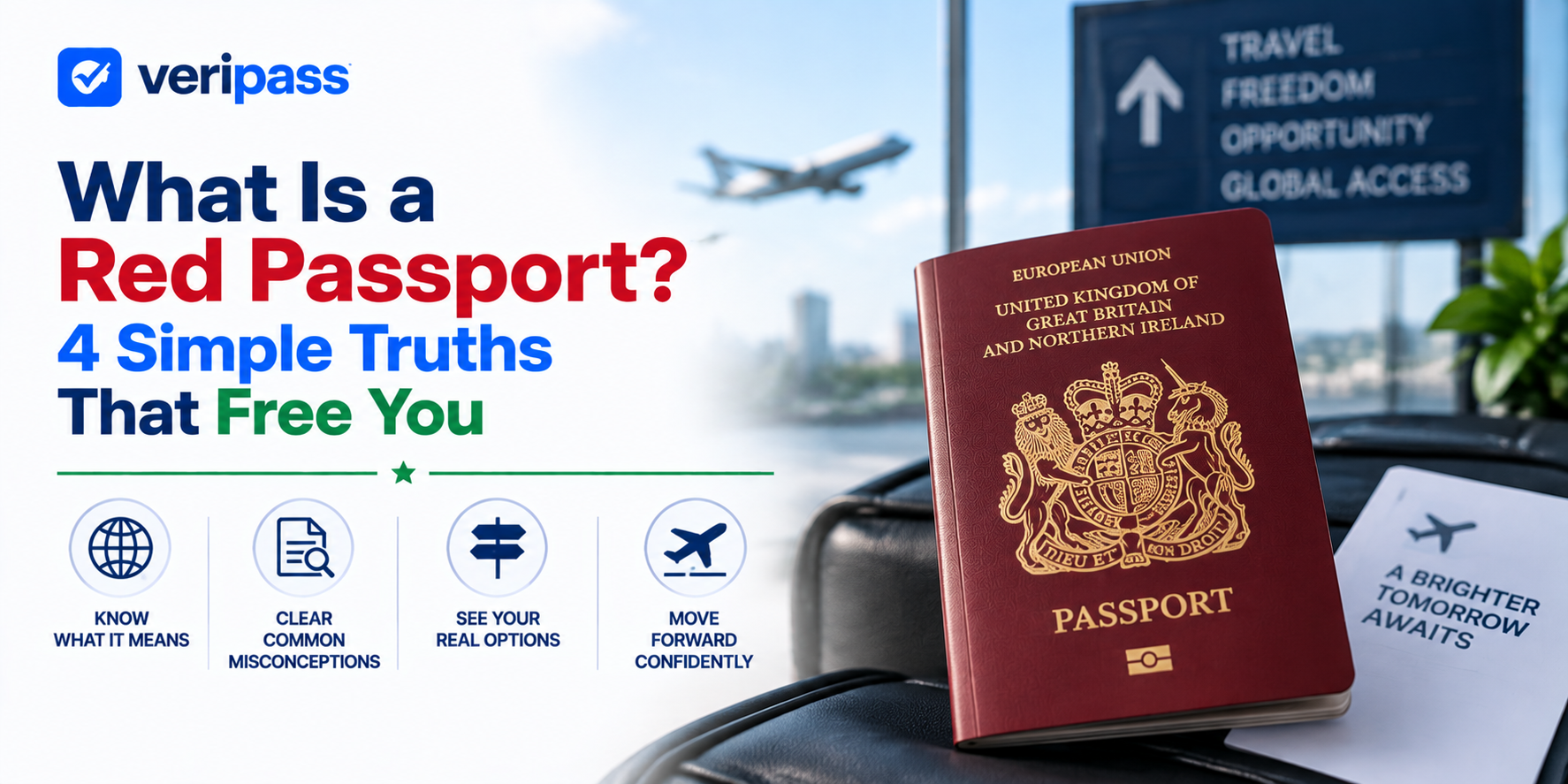
The man ahead of you got eight seconds and a nod. You got eleven minutes, a question about who paid for your ticket, and a second officer called over to study your face. Same flight, same suit, different cover. So you went home and typed what is a red passport into Google, half hoping the color explained why that line treated him like a guest, and you like a risk. It doesn’t. And the honest answer to what is a red passport matters far less to you than the answer almost nobody bothers to give.
You get both here. The second one is the one that moves you.
Read Also: Can I Go for Citizenship Interview Without My Passport? 5 Proven Solutions
What is a red passport in plain terms
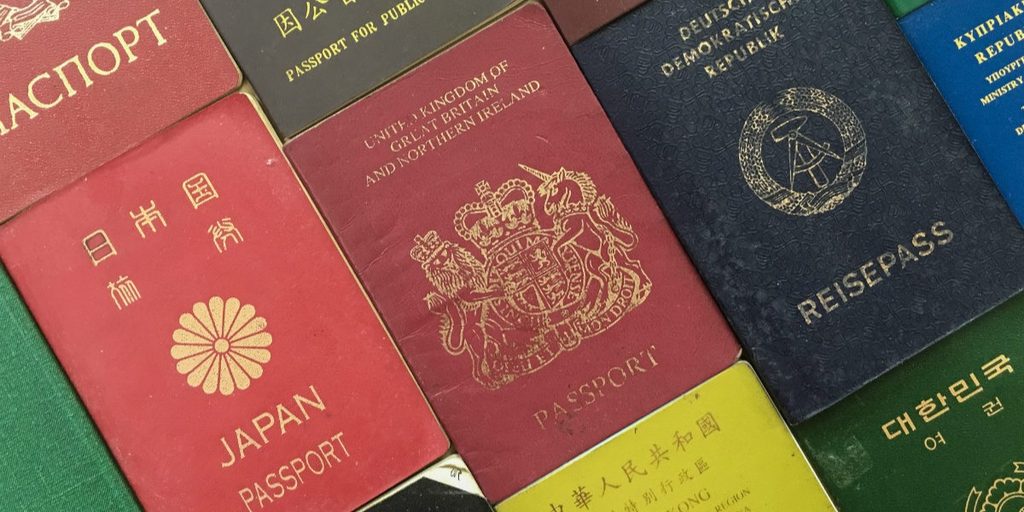
A red passport is an ordinary travel document with a red or burgundy cover, chosen by the issuing country. Governments pick their own color. Most that pick red are saying one of three things about themselves. They belong to a bloc like the European Union. They carry a political history rooted in Soviet or communist rule. Or their national flag is already red.
That is the whole meaning. It is identity, not access. No border officer anywhere gives you anything for the color.
Two different questions hide behind the same search
People typing this phrase usually want one of two answers, and mixing them up is why most articles on this topic feel slippery.
- Red as a country’s cover. You saw a red booklet in a queue and want to know which country it belongs to and why.
- Red as a rank inside one country. Someone at your company or your ministry carries a red or maroon passport that ordinary citizens don’t get, and you want to know what it gets them.
Those are separate systems. This piece answers both, starting with the first.
Nobody regulates passport color
The International Civil Aviation Organization sets the technical standard for travel documents in Doc 9303. That standard covers size, the machine-readable zone, chip data, and page layout. It says nothing about cover color.
So every country picks freely. Which means the color is a choice, and choices have reasons.
Why so many countries chose red
The European Union decision. On 23 June 1981, representatives of the member states meeting within the Council agreed on a uniform passport design and specified the cover color as burgundy red. You can read the original text on EUR-Lex. Their stated aim was to strengthen the feeling among nationals that they belonged to the same Community. The first burgundy passports appeared from 1985.
Here is the part most articles get wrong. That resolution was never legally binding. It was a recommendation, and member states adopted it because they wanted to. Croatia joined in 2013 and kept a dark blue cover, and remains the one EU member that never switched. The color was politics dressed as paperwork, and the moment a country stopped wanting the signal, it stopped wanting the color.
Soviet and communist lineage. Russia, China, and Serbia carry red for reasons that predate any modern bloc. Red was the color of the flag of the former Soviet Union, and the association stuck long after the politics changed.
Candidate signaling. Countries wanting into the EU have often shifted toward burgundy before any accession, which is a fairly transparent way of saying we are already one of you.
The flag. Switzerland, Bahrain, and Singapore chose red because red is on the flag. No bloc, no ideology, no story beyond that.
Red and burgundy together sit second only to blue as the most common cover color globally.

Burgundy, maroon, crimson, and why the shade matters
People argue about this more than they need to.
- Burgundy is the deep wine shade. This is the EU standard and the most common by a distance.
- Maroon leans brown-red. Turkey uses it for ordinary passports.
- Crimson is brighter and rarer. Japan’s ten-year passport sits here.
- True red is rare on ordinary passports and shows up more often in special categories.
For a search about color, the shade is the answer. Most pages skip it entirely.
Where the tidy rule breaks
Two countries wreck the neat story that color equals status, and both are worth knowing.
Japan sorts by validity, not by rank. An adult Japanese citizen picks their passport length, and the color follows the choice. Ten years gives you a crimson cover. Five years gives you blue. Two ordinary citizens, identical rights, different colors, purely because of how long the document lasts. Japan updated its passport in March 2025 with a polycarbonate photo page and a new online application route, and the color logic survived the redesign.
Turkey runs the hierarchy upside down. The ordinary Turkish passport is maroon. The prestige document is green, called the hususi or special passport, and it carries visa-free access to the Schengen Area that the maroon one does not have.
Pay attention to how Turkish citizens qualify for it, because this is the closest thing to a passport color you can earn. Senior civil servants at certain salary grades get it. Former parliamentarians and mayors get it. And exporters get it, by building a company that sustains export volumes above a set annual threshold across three consecutive years.
Read that again. In one country, the better travel document goes to people who built something measurable. That is not a passport story. That is a track record story, and it is the same logic that runs every talent visa route in the rest of this article.
Red as a rank, and what an official passport really gets you
Now the second question, because a lot of people searching this phrase are thinking about a colleague, not a country.
The United States runs four covers. Blue for regular citizens. Maroon for official government travel. Black for diplomats. Gray for certain contractors.
The maroon one looks impressive. Here is what the State Department itself says about special-issuance passports, in its own guidance.
- It does not provide diplomatic immunity.
- It is not valid for personal travel, apart from entering or leaving your country of assignment.
- It remains the property of the US government, and you hand it back when you leave the post.
- Many countries apply more visa requirements to special-issuance holders, not fewer.
Immunity comes from accreditation under the Vienna Conventions and recognition by the receiving state. It comes from the posting, never from the booklet. A maroon or black cover is a signal to a border officer about how to process you. It is not a shield, and it is not a shortcut.
You also cannot apply for one. It is assigned by the office. When the office ends, the passport goes back.
The power myth, settled in one line
Singapore carries a red passport and sits at the top of the Henley Passport Index with visa-free access to 192 destinations in 2026. Plenty of other red passports sit near the bottom of the same index. Same color, wildly different access.
Access comes from diplomatic relationships and from what you can prove about yourself. Never from the cover.
What actually moves you, and what you should be doing now
If you are a founder, an executive, a researcher or a senior specialist, your passport is fixed, and your record is not. Every serious talent route in the US, UK, Canada, and Australia is asking the same question in different words. Can you prove that letting you in produces something specific and traceable?
Here is what each route wants, and what you should be building right now.
United States, O-1A. For people with extraordinary ability in business, science, education or athletics. You need evidence across USCIS criteria such as awards, press coverage in recognized outlets, judging the work of others, membership requiring outstanding achievement, and high remuneration. Start collecting now. Say yes to judging panels and awards juries. Keep every article link with its date.
United States, EB-2 with a National Interest Waiver. This lets you skip the job offer and labor certification if your work has substantial merit and national importance, you are well positioned to advance it, and waiving the requirement benefits the United States. The USCIS EB-2 page sets out the standard. Frame your work around a documented national problem, not around your job title.
United Kingdom, Global Talent. No employer sponsor needed. You get endorsed by a designated body, then apply. Tech Nation still handles digital technology, though its own portal closed in August 2025 and applications now run through the standard Home Office Stage 1 form on GOV.UK Global Talent page. Most refusals come from generic recommendation letters and portfolios that list achievements without showing measurable impact. Three specific letters from senior people who genuinely know your work beat ten polite ones.
Canada: C10 and the Global Talent Stream. The C10 route under R205(a) lets an employer hire you without a Labour Market Impact Assessment when your work brings clear economic, social or cultural benefit. On 24 February 2026, IRCC reorganized and tightened those instructions, telling officers to reserve general exemptions for unique or exceptional situations and to look for benefit backed by outside corroboration rather than your own claims. The Global Talent Stream offers a faster employer-led path for in-demand tech roles. Third-party proof is now the whole game here.
Australia, National Innovation Visa, subclass 858. Permanent residence from day one, and it replaced the old Global Talent visa in December 2024. It is invitation-only. You submit an expression of interest, and you need a nominator with standing in your field plus an internationally recognized record of exceptional achievement. Check the current criteria on the Department of Home Affairs page.
The pattern across all five is the same. They pay for documented, external, verifiable impact. Which means the work starts long before the application.
Start now.
- Open a folder today and put every press mention, award letter, speaking invitation, and judging request in it, with dates.
- Get your revenue, user growth, cost savings or research citations into numbers you can source to something outside yourself.
- Ask for recommendation letters while people still remember your work clearly, not eighteen months later.
- Join the professional bodies in your field that actually screen members.
- Pick your target route before you write a single document, because the evidence you need differs sharply between them.
Where Veripass comes in
Most people lose these applications on presentation, not on merit. The record was there. The story wasn’t. Officers read hundreds of files and reject the ones that assert instead of prove.
Veripass exists for exactly that gap. We work with founders, executives, and skilled professionals who already have the substance and need it built into a case an adjudicator can approve.
Here is what that looks like in practice.
- Route selection first. We assess your profile against O-1A, EB-2 NIW, UK Global Talent, Canada C10 and Global Talent Stream, and the Australian National Innovation Visa, then tell you which one you actually qualify for today and which one you could qualify for in twelve months. That single decision saves most people a year and a rejected application.
- Evidence mapping. We take your career and map it criterion by criterion against the standard your chosen route applies, then show you exactly which criteria you meet, which are thin, and what you need to go and get.
- Gap closing. Where you fall short, we help you build. Judging opportunities, professional memberships, media placement, the specific kind of documentation each authority accepts.
- Recommendation letters that work. We identify the right recommenders and help shape letters that speak to the criteria instead of praising you in general terms.
- The petition itself. Your case gets written, structured and evidenced the way the reviewing officer reads it.
- Current rules, not last year’s. Requirements shift constantly, as the February 2026 Canadian tightening shows. We track them so your file reflects the standard in force when it lands.
You cannot change your passport color. You can change what your file proves about you, and that is the only variable that has ever mattered.
Book a free discovery call with Veripass and find out which pathway fits your profile right now.
Do passport colors mean anything?
What is the top 10 strongest passport?
1. Singapore — 192 destinations
2. Japan, South Korea and the United Arab Emirates — 188
3. Sweden — 187
4. Belgium, Denmark, Finland, France, Germany, Ireland, Italy, Luxembourg, Netherlands, Norway and 5. Spain — 186
6. Austria, Greece, Malta, Portugal and Switzerland — 185
The United Kingdom sits sixth. The United States has dropped to joint tenth with Iceland at 180 destinations, having held first place in 2006. The UAE is the biggest climber over twenty years, adding 153 destinations. Rankings shift every quarter, so check the index directly before quoting a number.
What do the different passport colors symbolize?
How many types of passport colors are there?
This article is for general information, not legal advice. Visa rules change often, so confirm current requirements on the official government pages linked above. Veripass does not guarantee any visa outcome.