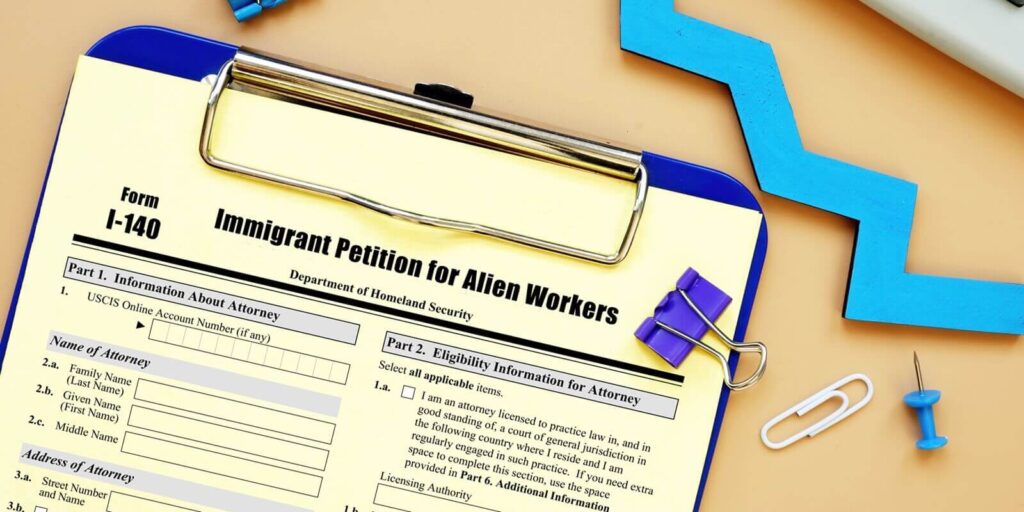
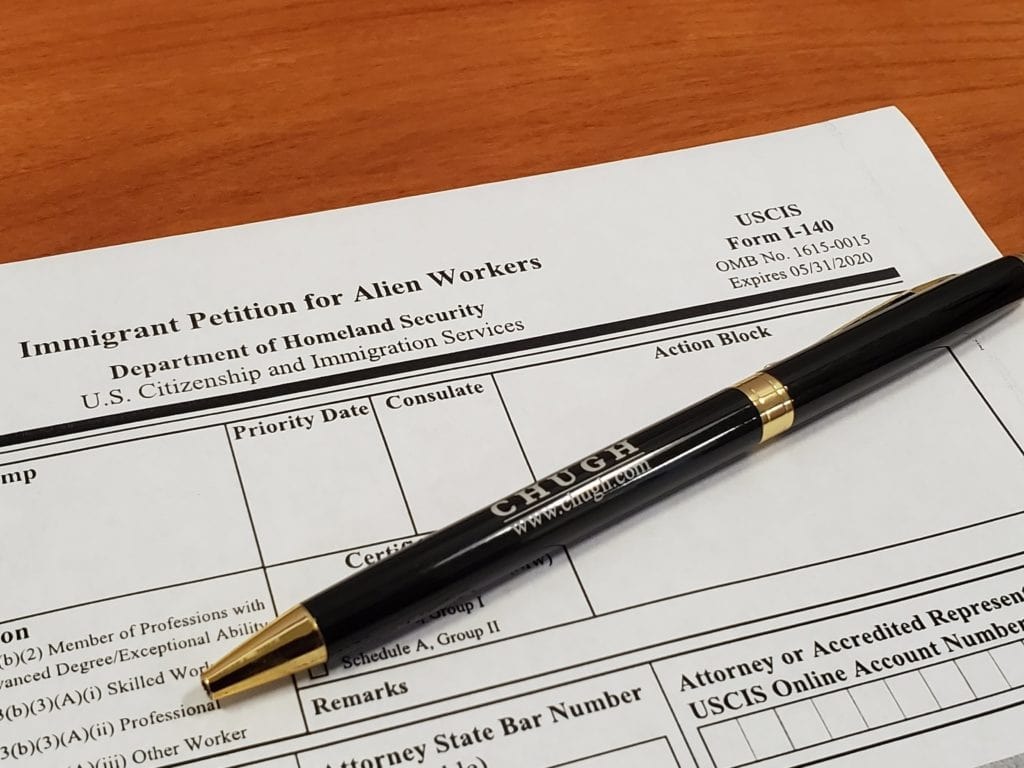
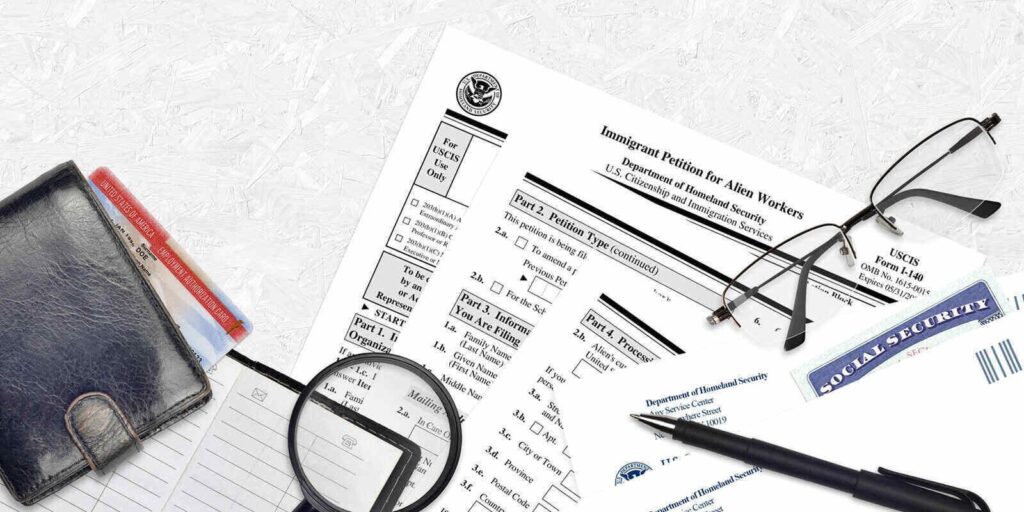
Form I-140, officially called the Immigrant Petition for Alien Workers, is one of the main filings used in employment-based green card cases. It allows a U.S. employer, or a qualified self-petitioner in limited categories, to ask USCIS to confirm that a foreign professional meets the rules for an immigrant classification.
For founders, executives, skilled workers, researchers, and some O-1 visa holders, this filing can connect a strong professional record to a long-term U.S. immigration plan.
Form I-140 approval is not a green card. It does not give you lawful status, work authorization, or travel permission by itself. You must still complete adjustment of status in the United States or consular processing abroad when an immigrant visa is available.
Read Also: How to Fill Out Form DS-160 for a U.S. Visa
What Does Form I-140 Do?
Form I-140 presents your qualifications, the requested employment-based category, and the evidence supporting the petition. In employer-sponsored cases, USCIS may also review the permanent job offer, the employer’s business records, and its ability to pay the offered wage.
The person or company filing the petition is the petitioner. The foreign worker is the beneficiary. In self-petition cases, the same person may fill both roles.
Many cases fall under EB-1, EB-2, or EB-3. The best category is the one whose legal test fits your record and can be supported with credible documents.
Who Can File Form I-140?
Most petitions come from U.S. employers. Two common categories allow self-petitioning:
- EB-1A for people with extraordinary ability
- EB-2 National Interest Waiver, or EB-2 NIW
A self-petitioner does not need a permanent job offer or PERM labor certification. EB-1B, EB-1C, employer-sponsored EB-2, and EB-3 generally require a qualifying U.S. employer. Many employer-sponsored EB-2 and EB-3 cases also need approved permanent labor certification before Form I-140 is filed.
Which Category May Fit You?
EB-1A Extraordinary Ability
EB-1A may fit people with sustained national or international recognition in business, science, education, arts, or athletics. You may qualify through a major internationally recognized award or by meeting at least three listed evidence criteria.
Evidence may include awards, published material about you, original contributions, judging, professional writing, selective memberships, leading roles, and high compensation. Meeting three criteria does not automatically lead to approval because USCIS also reviews the full record.
EB-1C Multinational Managers and Executives
EB-1C may fit an executive or manager who worked abroad for a qualifying related company and will take a qualifying role with the U.S. business.
USCIS may examine ownership records, the relationship between the companies, organizational charts, staffing, decision-making authority, budgets, and actual duties. A senior title without proof of executive or managerial responsibility may not be enough.
EB-2 National Interest Waiver
EB-2 NIW allows qualified applicants to request a waiver of the normal job-offer and labor-certification requirements.
You must first qualify for EB-2 through an advanced degree or exceptional ability. You must then show that your proposed work has substantial merit and national importance, that you are well positioned to advance it, and that the United States would benefit from waiving the normal requirements.
For founders, company registration or a business idea is not enough. Explain the work you plan to carry out in the United States, its wider value, the progress already made, and the experience, partnerships, resources, or results supporting your plan.
Employer-Sponsored EB-2 and EB-3
These categories may fit professionals and skilled workers with permanent U.S. job offers. Many cases begin with PERM labor certification through the Department of Labor. After approval, the employer files Form I-140 and shows that the worker meets the job requirements.
What Evidence Do You Need?
The exact evidence depends on the category. Most cases need a clear petition letter and organized documents that connect each fact to the legal test.
Common evidence may include:
- Passport identity page
- Resume or curriculum vitae
- Degrees, transcripts, and credential evaluations
- Employment verification letters
- Certified English translations
- Approved labor certification when required
- Job-offer and role details
- Employer tax, payroll, or financial records
- Awards, media coverage, publications, citations, or judging records
- Patents, products, contracts, grants, investment, or customer records
- Independent expert letters
- A proposed work plan for NIW
- Corporate records and organizational charts for EB-1C
Do not submit a large stack of documents without explanation. Show what each item proves and why it matters. USCIS provides an official initial-evidence checklist, but the checklist does not replace the form instructions or category rules.
Suggested image: Four document groups labeled identity, qualifications, impact, and employer records.
Alt text: Form I-140 evidence checklist
How the Filing Process Works
The process usually follows these steps:
- Choose the correct immigrant category.
- Confirm if an employer, job offer, or PERM approval is required.
- Collect evidence and address weak areas.
- Complete the current Form I-140 edition.
- Pay the correct fees.
- File at the correct USCIS location or use an available online option.
- Respond to any USCIS notice.
- Move to adjustment of status or consular processing when eligible.
The form asks about the petitioner, beneficiary, requested category, proposed employment, processing route, and related filings. Missing signatures, incorrect fees, conflicting dates, and the wrong filing address can cause rejection or delay.
Check the current Form I-140 page, form instructions, and filing addresses before submission.
Fees and Premium Processing
As of July 2026, the Form I-140 filing fee is $715. An Asylum Program Fee may also apply. Most employers pay $600, while qualifying small employers and individual self-petitioners may pay $300. Some nonprofit petitioners may qualify for an exemption.
Check the current USCIS fee schedule and fee calculator before paying.
Premium processing is available for eligible categories through Form I-907. For requests postmarked on or after March 1, 2026, the fee is $2,965. USCIS generally provides action within 15 business days for many eligible classifications and 45 business days for EB-1C and EB-2 NIW.
Action may mean approval, denial, a Request for Evidence, a Notice of Intent to Deny, or an investigation. Premium processing speeds up the response. It does not strengthen the case or promise approval.
Processing Time, Priority Dates, and the Next Stage
There are two different waits.
The first is the time USCIS takes to review Form I-140. It varies by category, processing office, case volume, evidence, and premium-processing use. Check the official USCIS processing-time tool.
The second is the wait for an immigrant visa number. Your priority date marks your place in line. Visa availability depends on the employment category, country group, and monthly Visa Bulletin.
If you are in the United States and meet the rules, you may file Form I-485 when a visa is available. In some cases, Form I-140 and Form I-485 can be filed together.
If you are outside the United States, the approved petition may move through the National Visa Center before an immigrant visa interview at a U.S. embassy or consulate.
Your spouse and unmarried children under 21 may qualify as derivative applicants, but each family member must meet the applicable rules and submit the required records.
Common Problems That Weaken a Case
A Request for Evidence, or RFE, asks for missing or stronger proof. A Notice of Intent to Deny, or NOID, means USCIS believes the petition may not qualify and gives the petitioner a chance to respond.
Common problems include:
- Choosing the wrong category
- Using an old form edition
- Paying the wrong fee
- Filing at the wrong address
- Relying on titles instead of actual duties
- Making broad claims without proof
- Submitting repetitive recommendation letters
- Ignoring conflicts between past filings, resumes, and public profiles
- Treating an O-1 approval as automatic proof for EB-1A
- Assuming premium processing guarantees approval
A denial may allow an appeal, motion, or new petition in some situations. The right response depends on the reason for denial and who has legal standing to challenge it.
Can You Change Jobs After Approval?
Some employment-based adjustment applicants may use job portability when Form I-485 has been pending for at least 180 days, and the new role is in the same or a similar occupational classification.
Employer withdrawal also does not always cancel an approved petition after the relevant 180-day point, but the worker may still need a qualifying job offer or another legal basis to complete the green card case.
Do not resign, close a company, or change your proposed NIW work based only on a general article. Get case-specific legal guidance first.
What Should You Do Before Filing?
Start with your evidence, not the form.
Choose the category that matches your facts. Define the job or proposed work clearly. Match every major claim to reliable proof. Review older visa forms, resumes, LinkedIn pages, company records, and public profiles for conflicting dates or descriptions.
Check the current form edition, fees, filing address, and visa availability. Plan the green card stage and consider the needs of your spouse and children before submitting the petition.
A strong case is not the thickest case. It presents a clear claim, reliable proof, and a direct connection to the legal test.
How Veripass Can Help
You may understand Form I-140 and still be unsure which category fits your record or what evidence needs work.
Veripass helps founders, executives, skilled professionals, researchers, creatives, and families assess U.S. immigration options before committing time and money to a filing plan.
It can help you compare O-1, EB-1A, EB-1C, and EB-2 NIW pathways, organize your professional record, identify evidence gaps, and prepare a document roadmap for discussions with qualified U.S. immigration counsel.
Veripass provides immigration technology and advisory support. A licensed U.S. immigration attorney should provide legal advice and representation.
Your achievements may support a U.S. immigration case, but only when they are matched to the right category and presented with credible proof.
Book a discovery call with Veripass to review your profile, compare your options, and identify the next steps for your U.S. immigration plan.
What is Form I-140 used for?
Is I-140 the same as a green card?
How long does it take for an I-140 to be approved?
What happens after I-140 is approved?
This article provides general information, not legal advice. Immigration rules, fees, form editions, filing locations, and visa availability can change.