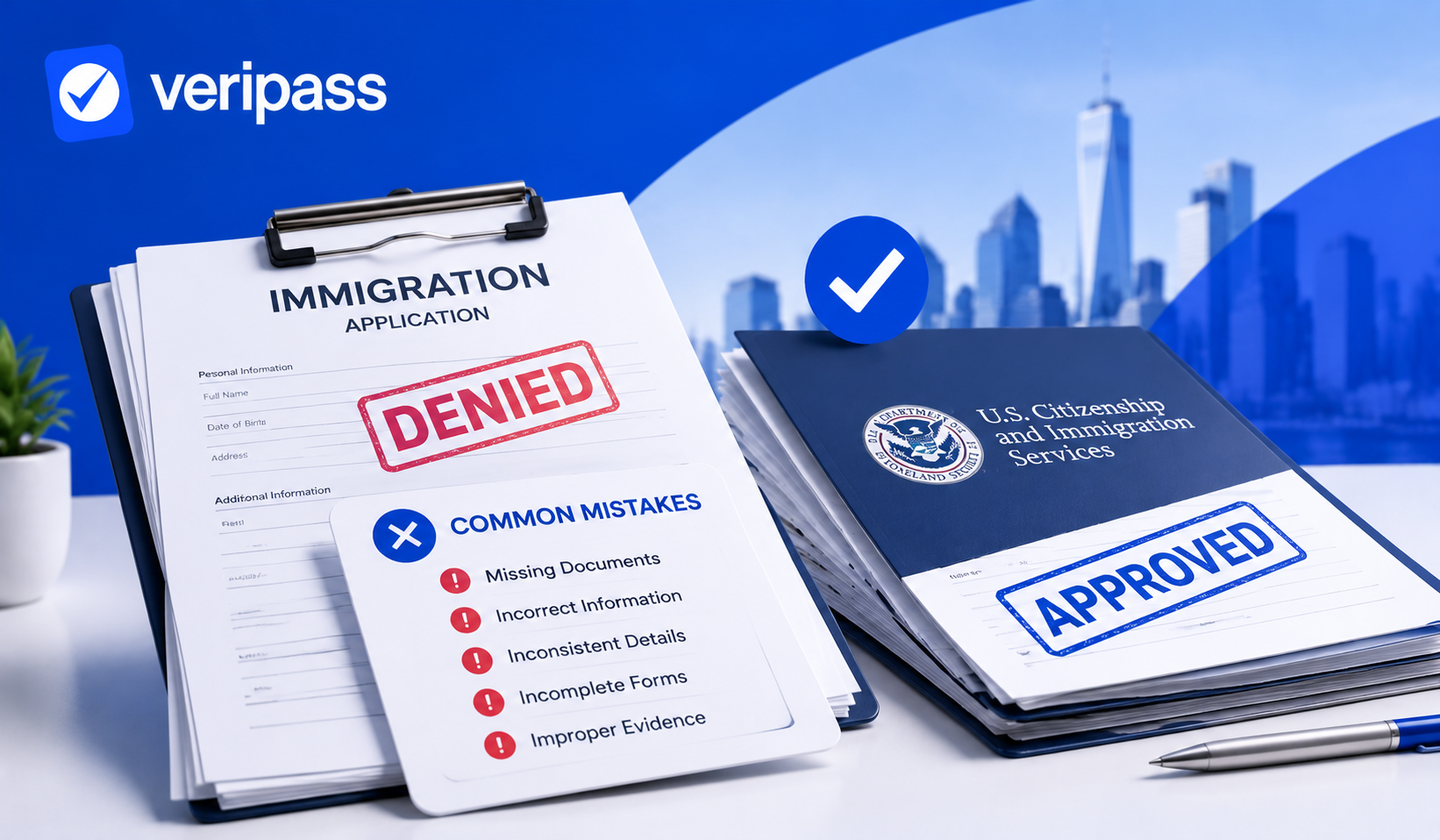
Most common immigration application mistakes don’t come from weak candidates. The profile was real. The achievements were legitimate. But somewhere between the evidence and the officer’s desk, something broke — a narrative that didn’t connect, expert letters that said nothing specific, a prong of the Dhanasar test that got one sentence instead of a full argument. USCIS doesn’t explain the denial in plain English. You get a decision letter that cites regulations. This is the translation.
Read Also: How to Leave Nigeria Permanently: A Professional’s Legal Roadmap to US Residency.

How USCIS Reviews Petitions and Where Most Common Immigration Application Mistakes Are Introduced
A USCIS officer isn’t reading your petition to find reasons to approve you. They’re checking whether what you submitted meets the legal standard on the page in front of them. If they can’t see the connection between your evidence and the regulation, your petition is in trouble, regardless of how qualified you actually are.
The Three Stages Where Errors Most Commonly Occur
Profile and category selection. This is where the most expensive mistakes happen. You file EB-2 NIW when your record actually supports EB-1A. Or you push for EB-1A before your evidence can carry it. Either way, you walk into a denial, and that denial follows you. Every petition after that one has to explain it.
Evidence construction. This is where strong profiles turn into weak petitions. Your CV looks great. Your achievements are real. But if the evidence isn’t structured to map to the legal criteria, the officer is left guessing. They don’t guess in your favor.
Response handling. An RFE or NOID isn’t a denial. It’s the officer telling you what’s missing. Most denials at this stage happen because applicants respond to the wrong thing or send a response that’s still incomplete.
The Difference Between an RFE, NOID, and Outright Denial
These aren’t interchangeable, and treating them as such is its own mistake.
An RFE (Request for Evidence) means the officer needs more before deciding. You typically get up to 87 days to respond, though some come with shorter windows. Check the date on yours. Most petitions that receive an RFE still get approved with the right response.
A NOID (Notice of Intent to Deny) means the officer has already leaned toward no. You get around 30 days to change their mind. The bar is higher because the opinion is already formed.
An outright denial comes with no warning and no chance to respond. It happens when something fundamental was missing that additional evidence couldn’t have fixed.
O-1A: The Mistakes That Trigger RFEs on Cases That Should Sail Through
In FY2025, the O-1A maintained a 93.9% approval rate, one of the most reliable employment-based routes in the US system. But 19.7% of petitions received an RFE, and the cases that got hit tend to share the same problems.
No Narrative Connecting the Evidence
USCIS gives you eight criteria, and requires at least three (the full list is in the regulations). The mistake is treating this like a checklist: awards here, press there, a board role, a panel appearance, assuming the officer connects the dots. They won’t. They’re reviewing dozens of these a week. If the petition doesn’t open with a clear story about who you are, what you’ve built, and why it matters, and then route each piece of evidence back to that story, it reads like a CV. CVs get RFEs.
Generic Expert Letters
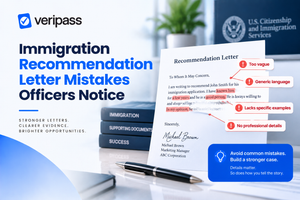
This is the single most common O-1A failure point. Three letters arrive on the officer’s desk, all opening with some version of “I have known [name] for X years and consider them extraordinary in their field.” Officers recognize the pattern immediately. They know what a templated letter looks like.
Here’s what a real expert letter looks like. A letter that works names the specific work you did, explains why it matters with precision, and comes from someone who can speak to the work itself, not just your general reputation. If your referees are filling in a template, that’s the problem. Push back.
For a full breakdown of what a strong O-1A evidence package looks like: O-1A Visa for Tech Founders: What ‘Extraordinary Ability’ Actually Requires
Evidence Filed Under the Wrong Criterion
A magazine feature isn’t automatically “media coverage.” A board seat isn’t automatically a “leading or critical role.” Each criterion has its own bar, and strong evidence filed under the wrong one is wasted. A founder who sits on the board of an early-stage startup might think that clears the critical role criterion. It doesn’t, unless the organization itself has a distinguished reputation.
EB-2 NIW Petition Mistakes That Lead to Denials
EB-2 NIW approval rates fell from 80% in FY2023 to 43% in FY2024. By Q3 FY2025, the rate dropped further to 54%. The Dhanasar framework hasn’t changed. What changed is how strictly officers are now reading it. Three mistakes account for most of the damage.
Thin Treatment of Prong Three
The Dhanasar case requires three things: your work has substantial merit and national importance, you’re the right person to advance it, and the US benefits from waiving the normal job offer and labor certification requirement. Most petitions spend the brief on the first two and treat prong three like a closing line.
That’s the mistake. Prong three is its own argument. You have to show why letting you bypass employer sponsorship serves the country better than making you go through it. That needs evidence, not a sentence saying America benefits. Officers are reading prong three closely right now, and a thin one is enough on its own to deny the petition.
Personal Benefit Dressed As National Interest
“I will earn income, pay taxes, and create jobs” is a personal benefit. Officers know the difference. National interest means your work advances something the US has specifically flagged as a priority, such as energy security, public health infrastructure, AI safety, domestic manufacturing, or critical technology. If the petition can’t point to a stated national priority and connect your specific work to it with real evidence, it’s writing about you, not about the country.
Future Impact Statements With No Specificity
“My research will improve healthcare outcomes” does nothing. A paragraph that names the diagnostic gap, the population affected, the US health systems requesting pilot access, and measurable traction your work has built – that does work. Officers are looking for specificity, named beneficiaries, and existing evidence of traction. If your future impact paragraph could have been written by anyone in your general field, it’s filler.
For more on building an NIW case that holds up under current scrutiny, see EB-2 NIW Approval Rate 2026: What African Founders and Professionals Should Know.
I-140 Employer-Sponsored Petition: Where Nigerian Applicants Get Caught
Credential Evaluation Errors
This is where Nigerian applicants run into more trouble than any other group. EB-2 requires a US bachelor’s equivalent plus five years of progressive experience, or a master’s equivalent. A three-year Nigerian B.Sc. doesn’t automatically equal a four-year US degree. HND evaluation outcomes vary by evaluator, and if you’re combining education with experience to clear the EB-2 bar, the evaluation has to follow the framework in Matter of Sea, Inc. The wrong evaluator gets you an RFE; a cheap one can get you a denial. Your credential evaluation is the most important document in this petition. Get the right one before your employer files.
PERM and I-140 Mismatches
Your employer files a PERM labor certification with the Department of Labor before the I-140. The PERM locks in your job title, duties, worksite, and wage. The I-140 must match. If your role has changed since the PERM was filed — more senior duties, a different location, a different title — that drift reads as either a fraud signal or a careless filing. Flag it before the I-140 goes out.

RFE Responses: How Salvageable Cases Become Denials
An RFE isn’t a denial. Most petitions that receive one still get approved if the response actually addresses the officer’s question.
Responding to Only Part of the RFE
Most RFEs raise more than one issue. Applicants address the longest one, and brush past the others. An unanswered concern closes the case the same way a denied one does.
Sending Evidence That Doesn’t Match The Question
The officer asks for evidence that your work has been cited in independent publications. You sent ten new press features. Press features are not citations. The response now signals either that you didn’t understand the concern or that you don’t have what they’re asking for. Read the RFE three times. Underline what was actually asked. Build the response to answer that specific question, using evidence that meets the criterion raised.
Missing the RFE Deadline
USCIS does not grant RFE extensions. Miss the deadline, and the petition is automatically denied. If your response needs documentation from a Nigerian source that takes weeks to obtain, start chasing it the day the RFE arrives
After a Denial: Picking The Right Next Move
Motion to Reconsider vs Motion to Reopen
These two sound similar, but they do different things.
A Motion to Reconsider argues the officer applied the law incorrectly based on what was already in your file, with no new evidence, just a legal argument. A Motion to Reopen brings in something new: evidence that didn’t exist at filing or couldn’t reasonably have been produced then. Both are filed on Form I-290B within 30 days of the denial (33 if mailed). If the denial reads like a legal misapplication, that’s a Reconsider. If something has materially changed, that’s a Reopen.
Administrative Appeals Office (AAO) Appeals
The AAO reviews your denial independently. Worth pursuing when the officer clearly misapplied a regulation, and you can show the AAO exactly where. Not worth it when the underlying evidence was thin. The AAO upholds most denials, and an appeal won’t strengthen evidence that wasn’t there.
When to Refile With a Stronger Case Instead
Sometimes the cleanest move is to start over with stronger evidence, or under a category that actually fits your record. The original denial remains on file, and every future petition must address it. Refile only when you genuinely have something new to add, or when an honest review tells you the first filing was too early, or when the original denial reveals you were in the wrong category from the start.
Where Veripass Comes In
The petitions that get denied aren’t usually from weak applicants. They’re from strong applicants whose cases were built incorrectly: wrong category, evidence that doesn’t map to the criteria, and an RFE response that addressed a comfortable concern rather than the real one.
Veripass sits on the strategy side before the filing side. Which category actually fits your profile? Whether your evidence is structured the way an officer needs to see it. Whether your petition tells a story that maps to the legal standard. If an RFE has already landed, what the officer actually asked for, and how to answer it.
A denied petition is expensive – in time, money, and momentum. Book a discovery call and let a Veripass strategist review your case before you file, not after.
Can I appeal a USCIS denial on my O-1A or I-140 petition?
Yes, but an appeal isn’t always the right move. You have three options: a Motion to Reconsider or Reopen with the original office, an AAO appeal, or a refile. Appeals and MTRs work when the officer got the law wrong. A refile works when your evidence was too thin, and you can now close the gap. The AAO upholds most denials, so don’t appeal unless you can point to a specific legal error, not just a result you disagree with.
What is the difference between an RFE and a NOID?
An RFE means the officer needs more information before deciding. A NOID means they’ve already leaned toward denial, and you have around 30 days to change their mind. The language at the top of the notice tells you which one you’re dealing with. RFEs are recoverable with the right response. NOIDs are harder. The opinion is already formed.
How long do I have to respond to a USCIS RFE?
Most give you up to 87 days, but some come with shorter windows depending on the petition type. The exact deadline is printed on the notice. Don’t assume the 87-day default applies. USCIS does not grant extensions, and a missed deadline results in an automatic denial with no path back except a Motion to Reopen.
Can I refile my petition after a denial without waiting?
There’s no mandatory waiting period, but there’s no point refiling with the same evidence. The denial stays on your record, and every future petition has to address it. Refile when you genuinely have new evidence, when the original petition was filed under the wrong category, or when an honest assessment tells you it went in too early.
Should I handle my own RFE response or hire an attorney?
Depends on what the RFE is asking. A simple clerical issue, like a missing signature or basic document, you may be able to handle yourself. A substantive one questioning your evidence of extraordinary ability, your national-interest argument, or your expert letters needs a specialist. Getting the response wrong doesn’t just lose the petition — it closes the path
⚠️ This article is for informational purposes only and does not constitute legal advice. Immigration law and policy change regularly. Consult a licensed immigration professional for guidance specific to your circumstances.