
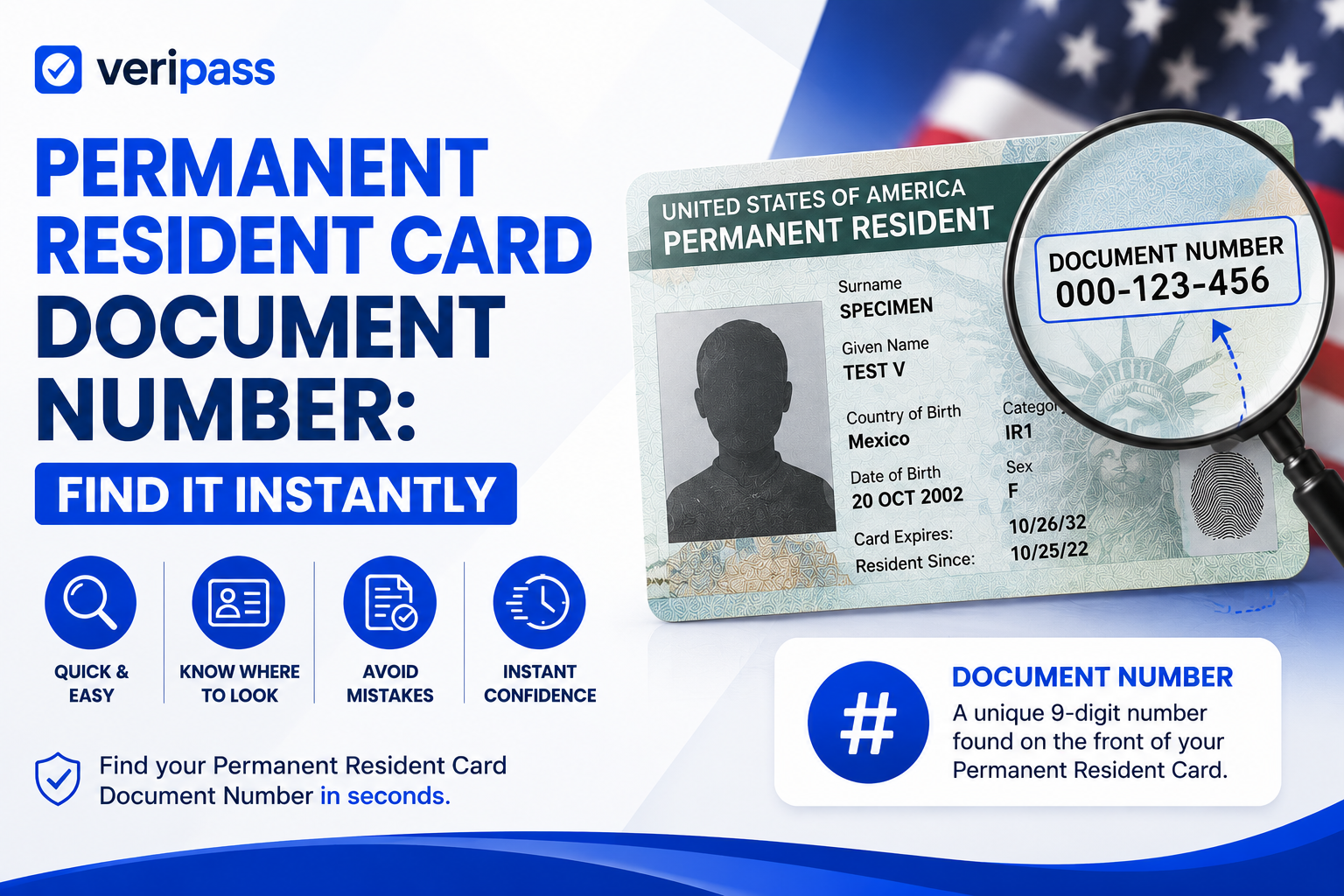
Your permanent resident card document number is the first thing an employer will ask you for, and the first thing you will not be able to find. The card arrives after years. The recommendation letters that took four months to collect. The evidence file you rebuilt three times. The attorney calls at 11pm Lagos time. Then you turn the card over, and the number they want is nowhere. No label. No heading. Nothing that matches the words on the form in front of you.
You start wondering if they sent you the wrong card. They did not. Your permanent resident card document number is right there on the back, sitting inside a block of characters with no title above it, because that part of the card was built for a machine to read rather than for you. This guide shows you where it sits on every card version, which forms want it, and the one mistake that turns a two-minute task into a problem on your record.
See Also: Green Card Renewal: The 2026 Rules Most Guides Still Get Wrong
What this number actually is
Your permanent resident card document number identifies the physical piece of plastic in your hand. Not you. The card.
That distinction matters more than it sounds. If you renew your card in ten years, you get a new document number. Lose the card and replace it, new number again. The number belongs to the document, and when the document changes, so does the number.
The format is three letters followed by ten or eleven numbers. Most cards issued today carry the ten-digit version, so thirteen characters in total, something like SRC2204512345. USCIS guidance for employers allows for either ten or eleven numbers, which is worth knowing because plenty of articles online insist it is always thirteen characters. If yours runs to fourteen, your card is fine. TechnologyAdvice
Where to find it on your card
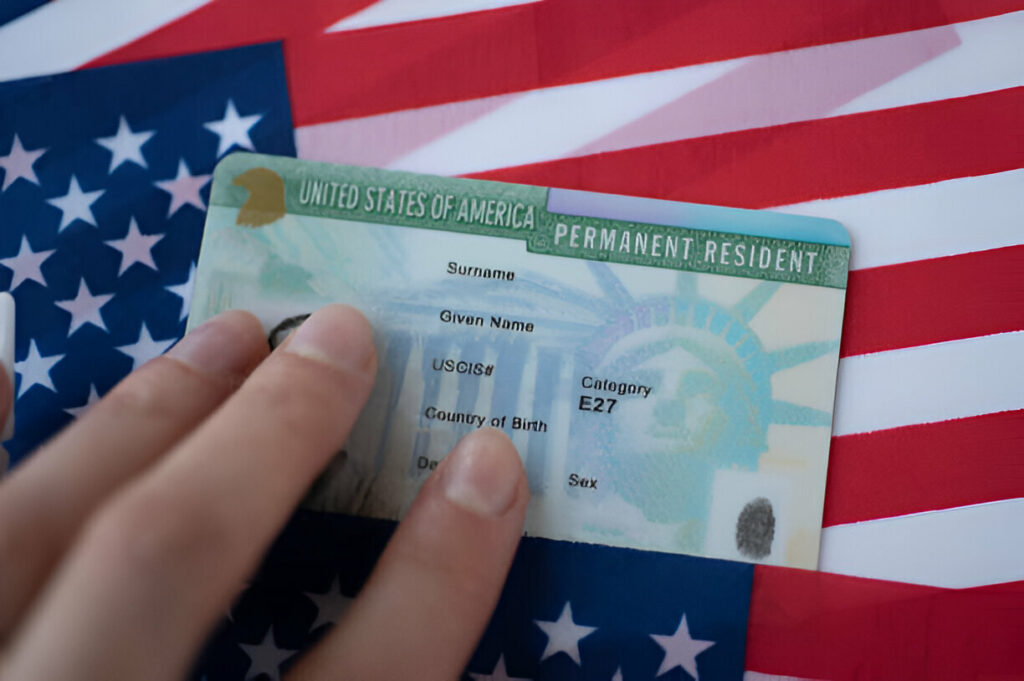
USCIS redesigns the permanent resident card every three to five years, and older designs stay valid until the expiration date printed on them. So the number moves depending on when your card was issued. I-9intelligence
| Card version | Where the number sits |
|---|---|
| Current design, issued from January 30, 2023 | Back of the card, inside the machine-readable text at the bottom |
| Previous design, issued from May 1, 2017 | Back of the card, in the machine-readable text. No black stripe on this version |
| Older design, issued from May 2010 | Back of the card, in the machine-readable text |
| Pre-May 2010 designs | Front of the card on some versions |
If your card was issued shortly after January 2023 and still carries the older design, that is normal. USCIS uses up existing card stock before switching over, and both versions are accepted. Ogletree
On the back of a modern card, you will see three lines of thirty characters each, padded out with < symbols. Your document number sits in the first line, in the last thirteen characters before the closing symbols. Ignore everything that comes before it. Those earlier characters carry your residence type and your A-Number, which is a different thing entirely.
The five numbers people mix up
This is where most of the damage happens. Five different identifiers get called “green card number” in casual conversation, and they are not interchangeable.
| Identifier | Format | Where it appears | Changes on renewal |
|---|---|---|---|
| Document number | 3 letters + 10 or 11 digits | Back of card, unlabeled | Yes |
| USCIS Number / A-Number | 7 to 9 digits, usually 9, shown with an “A” | Front of card, labeled “USCIS#” | No, yours for life |
| Receipt number | 3 letters + 10 digits | Top of any I-797 notice | Not applicable, one per filing |
| Case number | Part of the document number | Embedded in the last 5 digits | Yes |
| “Card number” | Informal term | Nowhere official | Depends who is asking |
The two that matter most are the first two. Your A-Number identifies you as a person inside the immigration system and follows you from your first filing to the day you naturalize. Your document number identifies one card. Renew or replace the card and the document number changes, while the A-Number stays exactly where it was. Allstatesservice
Which form wants which number
Get this table right, and you avoid the two most common errors people make in their first year as a resident.
| Form or process | Which number it wants |
|---|---|
| Form I-9, Section 1 | A-Number, entered by you |
| Form I-9, Section 2 | Document number, entered by your employer |
| E-Verify | Document number, pulled from Section 2 |
| Form I-90 renewal | Document number from your current card |
| Form N-400 naturalization | A-Number and your card details |
| State DMV and REAL ID | Usually both, plus the physical card |
Notice what happens on the I-9. Two different numbers go on the same form in two different places. The USCIS instructions direct you to enter your 7- to 9-digit USCIS Number in Section 1 when you select lawful permanent resident. Your employer then records the document number from the card itself in Section 2. I-9intelligence
Some articles online will tell you the Section 2 document number field wants your A-Number. That is wrong, and it is a genuinely expensive kind of wrong. Entering the A-Number in the Section 2 document number field is a paperwork violation, counted per form, if an audit examiner reaches your file. If you are a founder who will one day hire other visa holders, this becomes your problem rather than someone else’s. CitizenPath
Your document number and your receipt number look identical
Nobody covers this, and it confuses almost everyone who files an I-90.
Both numbers use the same shape. Three letters, then digits. Both start with a service center code. Put them side by side on a table, and you cannot tell which is which by looking.
The difference is where they live. Your document number is on the card. Your receipt number is at the top of your Form I-797 Notice of Action, printed with a clear “Receipt Number” label above it. If a form asks for your document number and you are holding both a card and a notice, take the number from the card.
What your number quietly tells people
The characters are not random. Reading left to right, the first three letters identify the USCIS service center that handled your case, the next two digits give the fiscal year the case was opened, the three digits after that give the working day of that year, and the final five digits are your case number. Marble
The service center codes you are most likely to see are IOE for cases filed online, MSC for the National Benefits Center, NBC, TSC for Texas, NSC for Nebraska, VSC for Vermont, CSC for California, and YSC for Potomac.
The fiscal year part trips people up. The US government’s fiscal year runs from October 1 to September 30, so a case opened in November 2024 carries the code 25.
This also means your document number reveals roughly when and where your case was processed. It is not a secret, and it is far less sensitive than your A-Number, which links to your entire immigration file. Give the document number to an employer completing your I-9 or a DMV clerk processing your license. Be more careful with your A-Number.
When your card expires, and you are still waiting
Most cards run for ten years. Renewals take a long time.
Since September 10, 2024, USCIS automatically extends the validity of an expired card by 36 months for anyone who properly files Form I-90. The extension starts the day after the expiration date printed on the card. Your receipt notice plus the expired card together work as proof of your status and your right to work. HotSchedulesIacoimmigration
Your document number does not change during this period. It changes when the new card arrives.
One practical warning. Some airlines outside the US do not accept a receipt notice as boarding documentation. If you plan to travel while a replacement is pending, contact the USCIS Contact Center and request an appointment for an ADIT stamp in your passport. Founders who fly often should treat this as a standing item rather than something to sort out three days before a flight. NatLawReview
If your card is damaged, lost, or hard to read
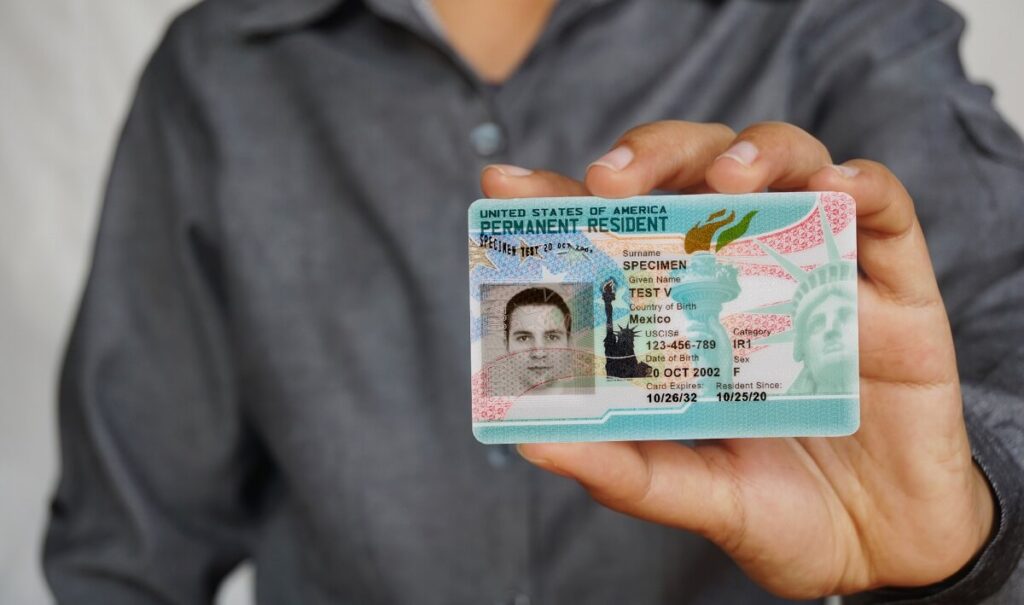
Cards go through washing machines. The machine-readable text wears down.
If you cannot read your own number, check an old I-9 copy from a previous employer, a scan of the card, or your USCIS online account, where the card details are attached to your case. If the physical card itself is unreadable, file Form I-90 and request the ADIT stamp as interim proof.
If your card was lost entirely, Form I-90 covers replacement too, and the ADIT stamp becomes your evidence of status while you wait.
Two situations worth knowing before you get there
Conditional cards. If your residence comes through marriage or through EB-5, your first card runs two years rather than ten. It carries a document number in the same format and the same place. You will file Form I-751 or I-829 to remove conditions, and the receipt notice from that filing extends your card the same way an I-90 receipt does.
Consular processing. Many O-1 and EB-2 holders do not adjust status inside the US. You attend an interview at the embassy, and the immigrant visa placed in your passport carries a temporary I-551 notation. For that document, the number to use is the one printed in red font under the “Expires On” date on the visa, not a card number, because you do not have a card yet. Your physical card arrives by mail after you enter the US, and the document number appears then. Burlingtoniowa
What you should be doing now
You do not have the card yet. Good. That is the best time to build habits that save you a year of friction later.
- Photograph both sides of every immigration document you receive. Front and back. The moment it reaches you. Store the images somewhere you can reach from any country.
- Keep a single document with your A-Number, your receipt numbers, and your priority date. Your A-Number is assigned long before your card is. Know it.
- Read every I-797 notice fully. The extension language and the validity period are printed on it, and they change.
- When you start work, check your own I-9. You are entitled to a copy. Confirm your A-Number sits in Section 1 and your document number sits in Section 2.
- Set a reminder for six months before your card expires. That is the earliest you can file the renewal.
Where Veripass fits
Everything above is downstream of one decision. Which pathway you use to get there.
Most people spend years on the wrong one. They chase EB-2 with a sponsoring employer when their profile is strong enough for EB-2 NIW without a sponsor. They assume O-1 is only for actors and athletes, when it is regularly approved for founders, researchers, and senior technical operators. They apply, get denied, and lose two years working out why.
Veripass exists for that decision. We work with founders, executives, and skilled professionals across five pathways. EB-1 for people with sustained recognition in their field. EB-2, including the National Interest Waiver route that removes the need for an employer sponsor. O-1 for founders and specialists with a documented record. Outside the US, we also handle the Australia National Innovation Visa and the UK Global Talent visa, which are often the faster route for people whose profile fits them better.
What we do is match your actual record to the pathway that will approve it, then help you build the evidence file that pathway demands. Not a generic checklist. The specific letters, publications, press, funding records, and third-party validation your category requires, assessed against what you already have and what you still need to build.
The people who reach the point of holding a card and squinting at the back of it are the ones who picked correctly at the start.
Start here
We run a free webinar covering how founders, executives, and skilled professionals qualify for EB-1, EB-2 NIW, O-1, the Australia National Innovation Visa, and the UK Global Talent visa. We walk through what each category actually asks for, the evidence that carries weight, and the profile mistakes that cause denials.
Register for the Veripass webinar
Where is the document number on a Permanent Resident Card?
On the back of the card, inside the block of machine-readable characters near the bottom. There is no label above it, which is why most people miss it on the first look. On cards issued before May 2010, some versions carry it on the front instead. USCIS started issuing the current design on January 30, 2023, and older designs stay valid until the expiration date printed on them, so check your issue date before you go hunting.
Where can I find the 13-character document number on my Permanent Resident Card?
Turn the card over. You will see three lines of thirty characters each, padded with < symbols. Your number sits in the first line, in the last thirteen characters before the closing symbols. It reads as three letters followed by ten numbers, something like SRC2204512345. Ignore everything before it, since those characters carry your residence type and A-Number.
One correction to what you will read elsewhere. Thirteen characters is common, not universal. USCIS guidance allows three letters followed by ten or eleven numbers, so a fourteen-character number is still valid.
What number do I enter on my I-9 for Permanent Resident Card?
Two different numbers, in two different places.
In Section 1, which you complete yourself, enter your 7- to 9-digit USCIS Number, also called your A-Number, after selecting lawful permanent resident. It is on the front of your card, labeled “USCIS#.” I-9intelligence
In Section 2, which your employer completes, they enter the document number from the back of the card.
Do not put the A-Number in the Section 2 document number field. That is a paperwork violation counted per form during an audit, and it is the single most common error on green card I-9s.
Is I-551 proof of permanent residency?
Yes. Form I-551 is the official name for the Permanent Resident Card, and it is a List A document for Form I-9, meaning it proves both your identity and your right to work on its own. No second document needed. I-9intelligence
Three variations count as proof too. An I-551 stamp in your passport. A temporary I-551 notation on your immigrant visa. And an expired card paired with a Form I-797 receipt notice, since USCIS has automatically extended expired card validity by 36 months for anyone who properly files Form I-90 since September 10, 2024. HotSchedules
Worth separating two things here. The card is proof of your status. It is not your status. Your permanent residence continues even if the card expires, gets lost, or sits in a drawer. You still need a valid card for work verification and re-entry to the US.
This article is general information, not legal advice, and does not create an attorney-client relationship. Veripass is an immigration advisory service and does not practice law.